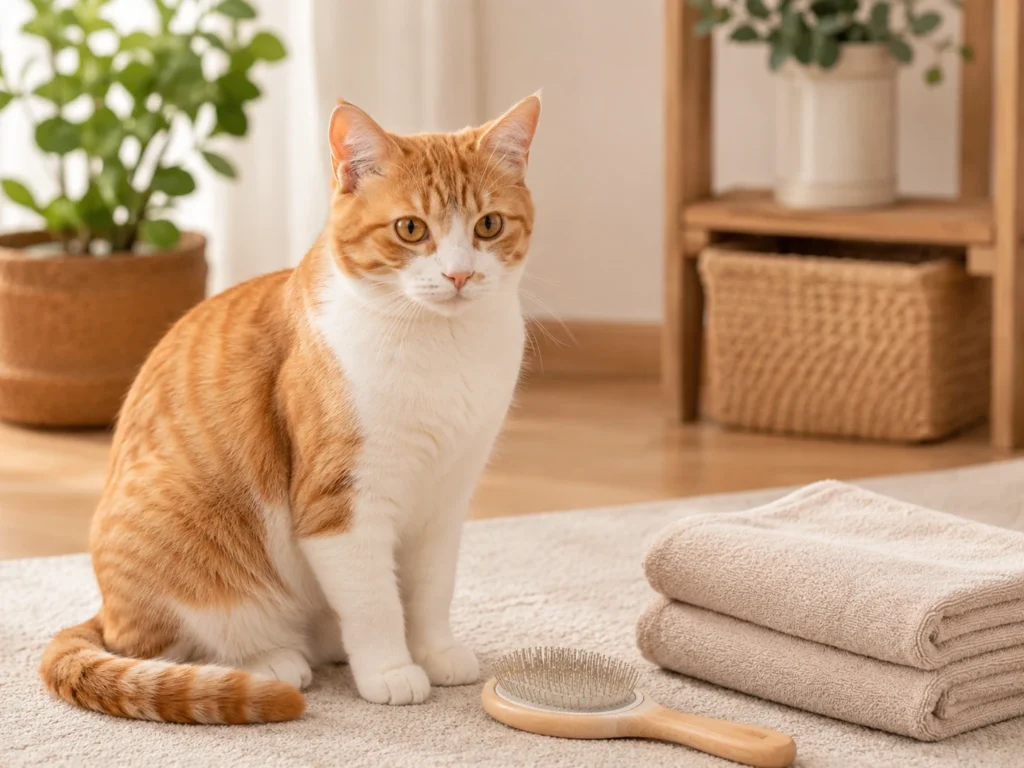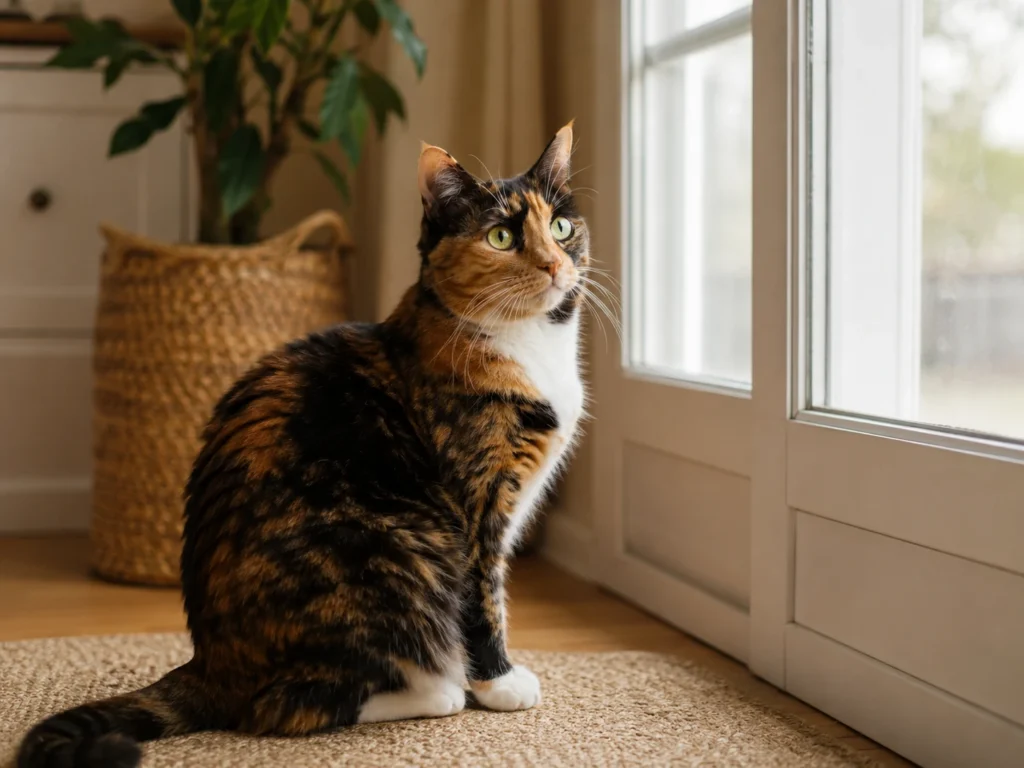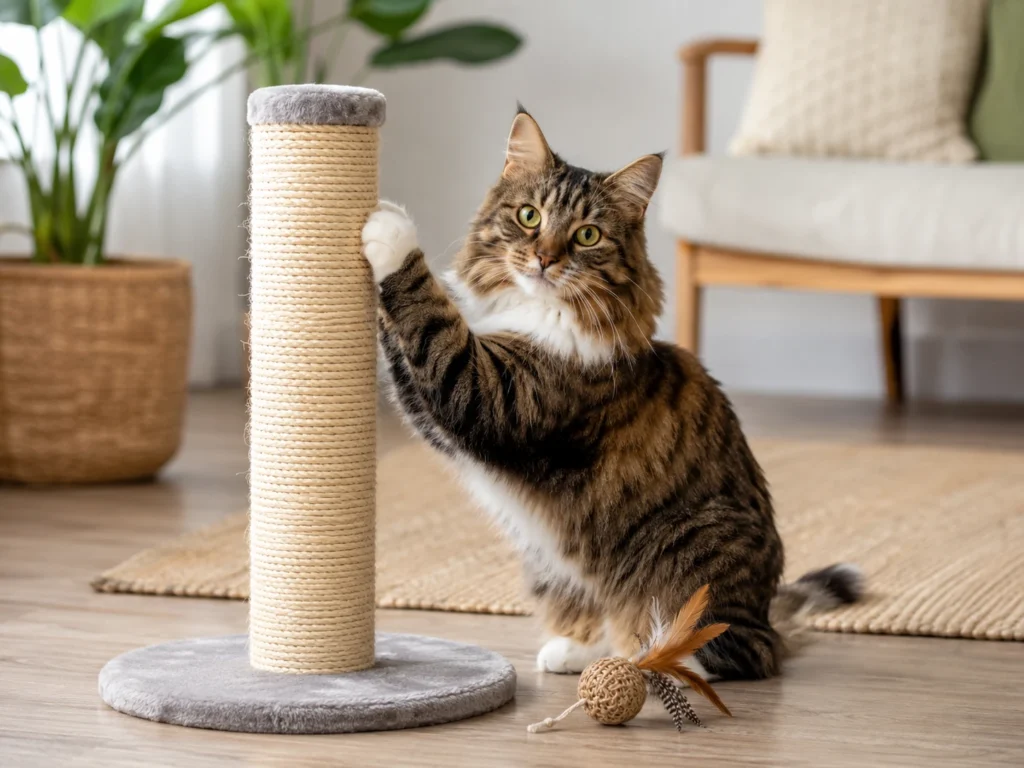
Cats often like high places because elevation gives them a wider view, more distance from household activity, and greater control over when they interact. A high perch can also provide a comfortable resting place, additional usable territory, and opportunities to climb and observe.
That does not mean every cat climbs for the same reason. One cat may choose a sunny windowsill for warmth, another may rest above the sofa to stay near the family without being touched, and another may retreat to a shelf when visitors arrive. The meaning depends on the location, timing, body language, and individual cat.
Quick Answer
Many cats value high places because they can watch what is happening without standing in the middle of it. From an elevated position, a cat may be able to monitor people, other animals, doors, windows, and movement around the room while remaining relatively undisturbed.
Height can also give a cat choices. They can stay nearby without being crowded, move away from another animal, or rest somewhere that feels secure. The AAFP and ISFM feline environmental needs guidelines identify elevated areas as environmental resources that expand vertical space and allow cats to monitor their surroundings.
However, high perching is not automatically a sign of fear, boredom, dominance, or unhappiness. For many cats, it is simply a normal and comfortable way to use the room.
A High Place Provides a Better View
Cats pay close attention to movement, sound, routines, and changes in their surroundings. A high perch can make that observation easier.
From a shelf, cat tower, cabinet, or furniture back, a cat may be able to see:
- people moving between rooms;
- another pet approaching;
- doors opening;
- activity around food or play areas;
- birds, insects, or people outside;
- a favorite person working or relaxing nearby.
Watching does not necessarily mean the cat feels threatened. A relaxed cat may spend long periods resting while occasionally checking the room. They may groom, sleep, stretch, or slowly blink from the perch rather than remaining constantly alert.
If the chosen position is beside a window, the view itself may be part of the attraction. Outdoor movement, changing light, warmth, and familiar routines can make the location interesting. Our guide to why cats sit by the window all day explains that specific behavior in more detail.
Height Creates Distance Without Complete Isolation
A cat does not always want to leave the room when they want space. An elevated resting place can let them remain near household activity without being stepped over, picked up, crowded, or repeatedly touched.
This can be particularly useful when:
- children are playing;
- visitors are present;
- a dog is moving around;
- people are cleaning or carrying objects;
- another cat is active;
- the room is busier than usual.
A cat resting above the activity may still want to see, hear, and smell what is happening. They are creating distance, not necessarily rejecting the household.
The FelineVMA’s environmental-needs guidance emphasizes the importance of safe places, control over social interaction, and resources that cats can access without being challenged. A raised resting place can help provide those choices when it is stable, accessible, and appropriate for the cat.
Vertical Space Makes More of the Home Usable
Cats use three-dimensional space. A bookcase, tower, secure wall perch, windowsill, and the floor may represent several different places to a cat even though they occupy the same part of a room.
This is especially valuable in a small home. Adding safe vertical options can increase the amount of usable territory without taking up much more floor space. It can also create separate places for climbing, resting, observing, and avoiding household traffic.
Vertical space is only one part of a suitable indoor environment, however. Cats also need scratching options, hiding places, play, comfortable resting areas, clean resources, and predictable routines. Keeping an indoor cat entertained involves more than providing one tall piece of furniture.
In a compact home, thoughtful placement matters more than trying to create the highest possible perch. Our guide to helping cats thrive in a studio apartment covers the wider relationship between layout, enrichment, resources, and vertical space.
Choice and Control May Matter More than Maximum Height
The most useful vertical setup is not necessarily the tallest one. What matters is whether the cat can choose where to rest, reach the location comfortably, and leave without becoming trapped or blocked. If you are deciding how to provide that space, Cat Tree or Cat Shelves: Which Is Better? compares freestanding trees, wall-mounted routes, and combined arrangements.
Some cats prefer an open perch with a wide view. Others prefer:
- a partially enclosed platform;
- a lower shelf beneath furniture;
- a covered bed;
- a box positioned off the floor;
- a quiet chair or windowsill;
- a lower perch with easy access;
- a resting spot close to a familiar person.
Preferences can change with age, health, household activity, temperature, or relationships with other animals. A cat might use a high open shelf when the home is quiet but choose an enclosed lower retreat when visitors arrive.
Cats Protection also notes that cats may choose particular surfaces for several location-dependent reasons, including warmth, comfort, scent, and security. Height may be important, but it is rarely the only feature affecting the choice.
Is Your Cat Relaxed or Using Height to Cope?
The perch alone cannot tell you how your cat feels. Look at the cat’s posture, routine, and behavior before and after they climb.
Signs of Relaxed Perching
A comfortable cat may:
- lie on their side or settle into a loose resting position;
- keep their ears in a neutral position;
- groom, stretch, or sleep;
- blink slowly or look away from activity;
- move between the perch and other parts of the home;
- continue eating, playing, exploring, and interacting normally;
- use the location at predictable times.
A cat who sleeps on the same shelf every afternoon may simply have a favorite resting place. There is no reason to label that behavior as anxiety when the cat appears comfortable and behaves normally elsewhere.
Signs the Cat May Be Maintaining Distance
Look more closely if the cat:
- remains tightly crouched or rigid;
- freezes when someone approaches;
- watches one person or animal continuously;
- keeps their ears flattened or repeatedly turns them toward a possible disturbance;
- struggles to settle;
- stays high whenever another cat enters;
- avoids coming down to eat, drink, play, or use the litter box;
- has recently started spending much more time out of reach;
- combines the behavior with hiding, appetite changes, aggression, or altered toileting.
These signs do not diagnose fear or anxiety. They indicate that the wider situation deserves attention.
A nervous cat may use height to preserve distance while still observing the room. In that case, forcing the cat down or placing them onto a different perch can remove the control they are trying to maintain. Instead, review what is happening around the location and use a broader, low-pressure plan for helping a nervous cat feel safe.
The Purpose May Change Throughout the Day
The same elevated place can serve different purposes at different times.
For example:
- A sunny windowsill may provide warmth in the morning and an outdoor view later.
- The back of a sofa may let a cat rest close to the family without sitting on someone’s lap.
- A shelf may be a normal sleeping place when the house is quiet but a retreat when visitors arrive.
- A cabinet may attract a cat because it overlooks food preparation or other interesting activity.
- A tower platform may function as a lookout, sleeping place, climbing route, or separation point between cats.
Rather than trying to assign one fixed meaning, ask what the location offers at the moment the cat chooses it.
Consider:
- What can the cat see from there?
- Who or what is nearby?
- Is the place warm, quiet, or familiar?
- Can the cat leave easily?
- Does another animal control the floor-level route?
- Does the cat appear relaxed after reaching it?
- Has the behavior changed recently?
These questions usually reveal more than a general claim about cats “wanting to be above everyone.”
High Places in Multi-Cat Homes
Vertical space can help cats manage distance, but one tower or shelf does not automatically solve tension between them.
The AAFP and ISFM environmental guidelines recommend multiple, separated environmental resources and note that choices of hiding, perching, feeding, drinking, and toileting locations can reduce competition and give cats more control.
In practical terms, a useful multi-cat setup may need:
- more than one elevated resting place;
- platforms at different heights;
- enough space for cats to avoid sharing a small surface;
- more than one route up or down;
- no narrow dead end where one cat can trap another;
- vertical options in separate parts of the home.
Watch for subtle blocking. One cat does not have to fight or hiss to restrict another cat’s access. Sitting on the only route to a perch or waiting at its base may be enough to make the other cat avoid it.
If there is persistent chasing, guarding, intimidation, fighting, or avoidance of essential resources, adding furniture alone is unlikely to resolve the problem. Veterinary or qualified feline-behavior support may be needed.
How to Provide Safe Vertical Choices
The goal is useful height, not extreme height. A moderate perch that your cat can reach and leave confidently is more valuable than a dramatic setup that is unstable or difficult to navigate.
Possible vertical resources include:
- a stable cat tower;
- professionally secured cat shelves;
- a secure window perch;
- wide, suitable furniture surfaces;
- a series of stable intermediate platforms;
- lower raised beds or platforms for cats with limited mobility.
If you choose a window-mounted option, Cat Window Perches: Safety and Setup explains how to choose, install, test and inspect it safely.
Whatever form you use, check the following.
Stability
The resource should not wobble, tip, slide, bend, or shift when the cat climbs or jumps onto it. A tall structure requires an appropriately stable base and secure construction.
For more detailed product-selection guidance, see what makes a good cat tower.
Platform Size and Grip
The resting surface should be large enough for the cat to turn, sit, and lie down without balancing on an edge. Avoid narrow, slippery, or poorly supported surfaces.
Fabric, securely fixed mats, or another suitable non-slip covering can improve grip. Any covering should remain flat and must not slide or bunch beneath the cat.
Safe Routes up and Down
A cat should have a realistic way to reach and leave the perch. That may involve:
- well-spaced platforms;
- stable furniture used as intermediate levels;
- pet steps;
- a gently inclined ramp;
- a lower landing area;
- more than one route in a multi-cat home.
Cats may be capable of impressive jumps, but capability varies. How cats jump so high is a separate question from whether a particular jump is comfortable and safe for an individual cat.
Secure Construction
Wall-mounted shelves and furniture must be installed according to their manufacturer’s instructions, including the stated mounting and weight-support requirements. Do not rely on a loose shelf, unstable cabinet, improvised stack, or surface that could dislodge under a cat’s weight.
A Safe Surrounding Area
Do not treat the following as suitable perches:
- an open window;
- a weak or loose window screen;
- a balcony railing;
- an unprotected ledge;
- the top of an unstable cabinet;
- an area beside a hot stovetop or unsafe appliance;
- a shelf holding toxic substances or breakable objects;
- a surface above a dangerous fall or hard, cluttered landing area.
A high place is only useful if the position and the route around it are safe.
Redirecting a Cat from an Unsafe High Place
If your cat repeatedly climbs somewhere unsafe, first work out what that location provides.
They may want:
- a view of the room;
- proximity to you;
- warmth;
- access to a window;
- distance from another animal;
- a quiet resting surface;
- an interesting place near household activity.
Provide a safer alternative that offers the same benefit whenever possible. If a freestanding tree is the safer alternative, our guide to choosing a suitable cat-tree location explains how to compare stability, access, traffic, window conditions, and safe exits. A perch hidden in an unused room may not compete with a cabinet overlooking the kitchen. Placement often matters as much as the product.
If the unsafe location is a food-preparation surface, see How to Keep Your Cat Off Kitchen Counters for a counter-specific management and training plan.
Make the alternative stable and comfortable, allow the cat to investigate it voluntarily, and reward its use with treats, play, bedding, or calm attention that the cat enjoys.
Avoid shouting, spraying water, startling devices, or frightening the cat down. The FelineVMA recommends redirecting and positively reinforcing preferred behavior instead of punishment or aversive methods, which can increase distress without removing the reason the location is attractive.
Do not physically drag a frightened cat from a high place unless there is an immediate safety emergency. If removal is necessary, keep the situation calm and avoid reaching in a way that corners the cat or places you at risk of being scratched or bitten.
Adapt Vertical Space to Your Cat’s Mobility
Kittens and active adult cats may enjoy climbing, but that does not mean they need extreme height. Their routes should still be stable, grippy, and free from dangerous gaps.
Senior cats and cats with limited mobility may continue to value elevated resting places while needing easier access. Useful adaptations include:
- lower platforms;
- smaller changes in height;
- wide intermediate steps;
- gently inclined ramps;
- non-slip surfaces;
- larger resting areas;
- soft bedding;
- favorite resources kept on the level where the cat spends most of their time.
Cat Friendly Homes recommends prioritizing easy access over height and identifies hesitation, difficulty jumping, stiffness, and limping as signs that a cat’s environment may need modification.
Do not assume a reluctant cat simply needs encouragement to jump higher. A sudden reduction in climbing may be more important than the height they previously preferred.
Contact a veterinarian if your cat:
- suddenly stops jumping or climbing;
- repeatedly hesitates before familiar jumps;
- misses jumps they previously completed reliably;
- appears stiff or slow;
- limps;
- reacts as if movement is painful;
- becomes unusually withdrawn;
- combines reduced mobility with appetite, grooming, or other behavior changes.
These changes can have several causes and should not be diagnosed from the cat’s furniture use alone.
What if Your Cat Does Not Like High Places?
Not every cat wants the highest perch available. Some prefer lower platforms, enclosed beds, boxes, spaces beneath furniture, or resting places beside their people.
Age, body size, mobility, confidence, previous experience, room layout, and surface stability can all affect the preference. A cat may also reject a high resource because it wobbles, feels exposed, has a slippery surface, or requires an uncomfortable jump.
Provide choices and watch what your cat uses voluntarily. The objective is not to make every cat climb. It is to give the individual cat safe and comfortable ways to rest, observe, retreat, and move around the home.
If your cat is specifically ignoring a tree that is already available, this guide to getting your cat to use a cat tree can help you distinguish preference from problems with safety, access, familiarity, mobility, or social pressure.
Helpful Related Guides
- What Makes A Good Cat Tower?
- How Can Cats Jump So High?
- Why Does My Cat Sit by the Window All Day?
- How Can I Keep an Indoor Cat Entertained?
- Is a Studio Apartment Cruel for Cats? (Tips for Thriving Felines)
- How Can I Help a Nervous Cat Feel Safe?
Final Thoughts
Cats often like high places because elevation gives them observation, distance, choice, and additional usable space. A favorite perch can be a perfectly normal resting place, not evidence that the cat is fearful, dominant, bored, or unhappy.
Interpret the behavior in context. Look at what the location provides, how the cat behaves while using it, and whether their habits have changed.
The best vertical environment is not the tallest one. It is a set of stable, accessible choices that suits the cat’s body, preferences, relationships, and home.