
How to Stop Your Cat From Dashing Out the Door
Make everyday arrivals and departures safer with a practical plan for doors, deliveries, guests and multiple cats. Learn where greeting-station training helps and where a physical barrier is essential.
Make everyday arrivals and departures safer with a practical plan for doors, deliveries, guests and multiple cats. Learn where greeting-station training helps and where a physical barrier is essential.

Check that your cat’s microchip leads to current contact details. Follow the steps to find the number and registry, update the correct record, resolve common problems and verify the result.
How to Check and Update Your Cat’s Microchip Details Read More »
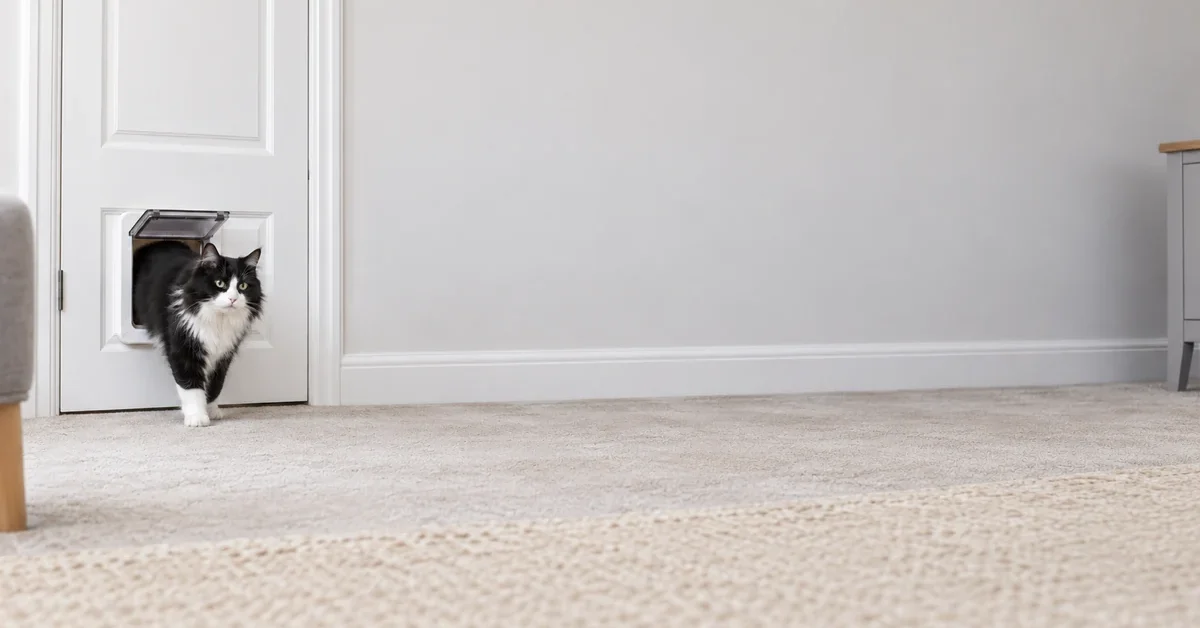
Help your cat learn a suitable, correctly installed flap without pressure. Separate the opening, moving panel and lock into manageable steps, with secure surroundings and an easy route back indoors.
Plan your cat’s care before building work begins. Assess whether staying home is suitable, control doors and construction hazards, prepare alternative care and reopen spaces carefully.
How to Keep Your Cat Safe During Home Renovations Read More »
Help your cat through a new work pattern with dependable care, familiar routines, gradual preparation where possible and a clear plan for shared responsibilities.
How to Help Your Cat Adjust When Your Work Schedule Changes Read More »
Plan quiet retreats around your home, check their entrances and escape routes, and agree on household rules that let your cat rest undisturbed. Includes practical checks for mobility, shared rooms and multi-cat access.

Identify your plants, remove dangerous ones, and build a reliable separation routine. This guide covers doors, maintenance, fallen leaves, soil and water, plus safe alternatives and what to do after possible exposure.
A cat’s claws move with the last bones of the toes. Learn how elastic ligaments, tendons, and muscles work together, why claws stay protected between uses, and how this movement differs from shedding an outer layer.
Choose a workable home weighing method, account for your cat’s carrier or liner, and record readings you can explain. Learn when an inconsistent result needs a setup check and when to contact your veterinarian.
Help your cat learn a portable mat cue through voluntary approaches, well-placed rewards, a clear release, and gradual practice with distance and new rooms.