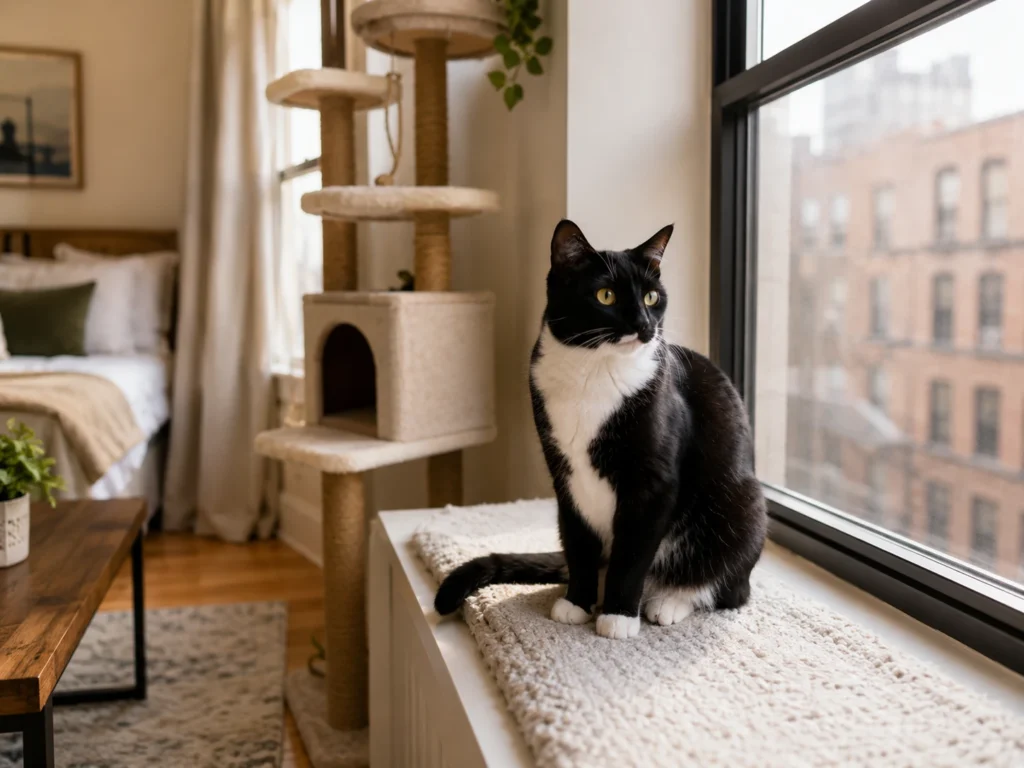
Before pickup, have secure transport, your cat’s current food and litter, suitable dishes, accessible litter facilities, hiding and resting places, usable scratching options, and manageable toys ready. Use suitable supplies that come with the cat or things you already own. Buy what is missing; postpone upgrades only when the underlying need is already met.
A new cat checklist should help you prepare for the cat you are bringing home, not fill a shopping cart.
Start With What Is Already Known
Use the current caregiver’s handover information to make your list specific. If you still need those answers, start with what to ask a shelter before adopting a cat. This checklist turns the answers into practical preparation.
For each essential, make one of these decisions:
- Coming with the cat: Confirm exactly what is included and when you will receive it.
- Already available: Check that your existing item is suitable, in good condition, and usable by this cat.
- Needed before pickup: Obtain what is missing or resolve an uncertain arrangement.
- Can wait: Name the suitable provision that already meets the need before postponing an upgrade.
For example, a promised food sample is only useful if you know it is the cat’s current food and can cover the gap until you obtain more. A carrier available to borrow still needs to be collected and checked.
These categories are Catcredo’s practical way to organize preparation, not a fixed shopping list or a rule about how many items every cat needs.
Check the Six Essential Areas
The Feline Veterinary Medical Association’s environmental guidance emphasizes safe places, separated resources, and opportunities for normal cat behavior. Having the equipment somewhere in the house is not enough: the cat must be able to reach and use it.
If you have resident animals, prepare separate resources for the newcomer rather than assuming shared supplies will cover everyone. Known care instructions and accessibility needs take priority throughout this checklist.
Secure Transport
Have a sturdy, ventilated carrier of a suitable size ready for collection, with its door and fastenings secure. Check an existing or borrowed carrier’s condition, history, and suitability rather than judging it only by appearance.
The FelineVMA carrier guide covers the features to look for. Confirm any collection requirements with the caregiver, including whether a carrier is provided or you must bring yours.
You do not need a different carrier simply because the one you have is not new. You do need a suitable carrier available before pickup. An ordinary cardboard hiding box is not a transport carrier.
Current Food and Suitable Dishes
Confirm the exact food the cat is eating, including its formula and wet or dry form, and follow the existing feeding instructions. Arrange a modest starter supply rather than stocking up on an unfamiliar food. If food is coming with the cat, check what you still need to provide.
Suitable household dishes can serve as food and water bowls if they are clean, intact, stable, easy to clean, and accessible to the cat. Place food and water apart, away from the litter area.
A matching bowl set can wait when suitable dishes are ready. A required diet or an adaptation specified in the cat’s care instructions cannot.
Current Litter, Accessible Boxes, and a Scoop
Have the cat’s current litter, suitable litter boxes, and a scoop ready before arrival. Use what you know about the cat’s existing setup, including the entry height and box style it can use.
Choose quiet, accessible locations away from food and water. Check access from the cat’s perspective: a box that is too difficult to enter does not meet the need just because it is on the list.
A decorative enclosure can wait when suitable toileting facilities are already available. Do not automatically put additional boxes in the “later” category. The home’s layout, resident animals, and this cat’s needs may make them part of preparation now.
Hiding and Resting Places
Prepare quiet places where the cat can retreat and rest without being disturbed. A suitable cardboard box with soft bedding may provide an indoor hiding option; a usable open carrier may offer another. Check that each option is stable and easy for this cat to enter and leave.
A familiar blanket supplied by the caregiver may already cover part of the bedding need. Confirm that it is coming rather than buying a replacement automatically.
A plush bed can wait if suitable resting and hiding places are already prepared. Neither a box nor a carrier guarantees that every cat’s needs are met, especially where access is limited.
Usable Scratching Options
Have stable scratching surfaces ready, using any known preferences to choose their shape and material. A cat accustomed to scratching horizontally may not find a vertical post an equivalent replacement.
Check that existing scratchers are in suitable condition, will not topple or slide during use, and can be reached where the cat will have access. Appropriate options matter more than buying an impressive-looking structure.
A larger cat tree can wait if adequate scratching and resting opportunities are already provided and no known need depends on it. Extra scratching locations or different surfaces are not automatically optional if the current provision is unsuitable.
Manageable Play
Prepare suitable toys you can use safely, taking known play preferences into account. A favorite toy coming from the caregiver may be more useful than a large assortment of untried toys.
Check reused toys for damage or loose parts. Toys with strings or parts that could be swallowed or cause tangling need supervision and a storage place out of reach afterward. Do not leave them out as the cat’s unattended entertainment.
A bulk toy collection can wait when safe play opportunities are covered. The opportunity to play cannot: postponing purchases should not mean preparing no enrichment.
Reuse What Fits, Not Whatever Is Available
Before counting an existing item as “covered,” check its suitability, condition, history, and any relevant caregiver or veterinary directions. A household dish and an unknown-history secondhand cat bed raise different questions.
Cleaning is part of preparation, but appearance alone does not settle whether an item is appropriate to reuse. If you are unsure about used pet equipment, ask the caregiver or veterinarian before relying on it. Do not improvise a disinfection recipe or assume every secondhand item must be discarded.
The useful question is not “Is this new?” It is “Can this safely meet this cat’s need now?”
A Hypothetical Decision: Buy the Accessible Box, Wait on the Bed
Suppose the cat’s caregiver passes on written veterinary instructions specifying a low-entry litter box and floor-level resting access. You already own a high-sided tray, suitable dishes, and a sound carrier. A familiar blanket is confirmed for pickup, and you have prepared an accessible hiding and resting place, scratching options, and suitable toys.
The high-sided tray does not satisfy the known access requirement. Obtain the suitable low-entry box before collection, along with any missing current food or litter.
The plush bed you were considering can wait because an appropriate resting place is already prepared. This decision follows the existing care instructions. It is not a diagnosis based on the cat’s age or appearance.
Before You Leave for Pickup
Make a final practical check:
- The suitable carrier is ready and any collection requirements are resolved.
- Current food and litter are on hand or specifically confirmed for handover.
- Food, water, and toileting locations are prepared with appropriate separation and access.
- Hiding, resting, scratching, and play needs are covered.
- Required individual adaptations are ready.
- Anything still uncertain has been clarified, rather than silently marked “can wait.”
Once preparation is complete, move to how to help your cat settle into a new home for the arrival itself.
Helpful Related Guides
Sources
View Sources and References
Feline Veterinary Medical Association: Supplies & Essentials. Guidance on preparing ordinary resources, obtaining a modest supply of the cat’s current food, and accounting for individual needs.
Cats Protection: Preparing Your Home for a Cat. Guidance on familiar food and litter, separate resource locations, hiding and resting options, carriers, and toy supervision.
Feline Veterinary Medical Association: Purrfect Journey, A Cat Carrier Guide for Caregivers. Guidance on ventilation, construction, and secure access.
Feline Veterinary Medical Association and International Cat Care: Your Cat’s Environmental Needs. Guidance on safe places, separated resources, play, and individual access.
AAFP Claw Friendly Educational Toolkit: Scratching Resources. Relevant sections on scratching preferences, stable and accessible scratching options, and play.
Humane World for Animals: How to Clean Pet Food and Water Bowls Properly. James Hettinger’s article, quoting veterinarian Barbara Hodges, informs the limited emphasis on suitable, cleanable dishes.