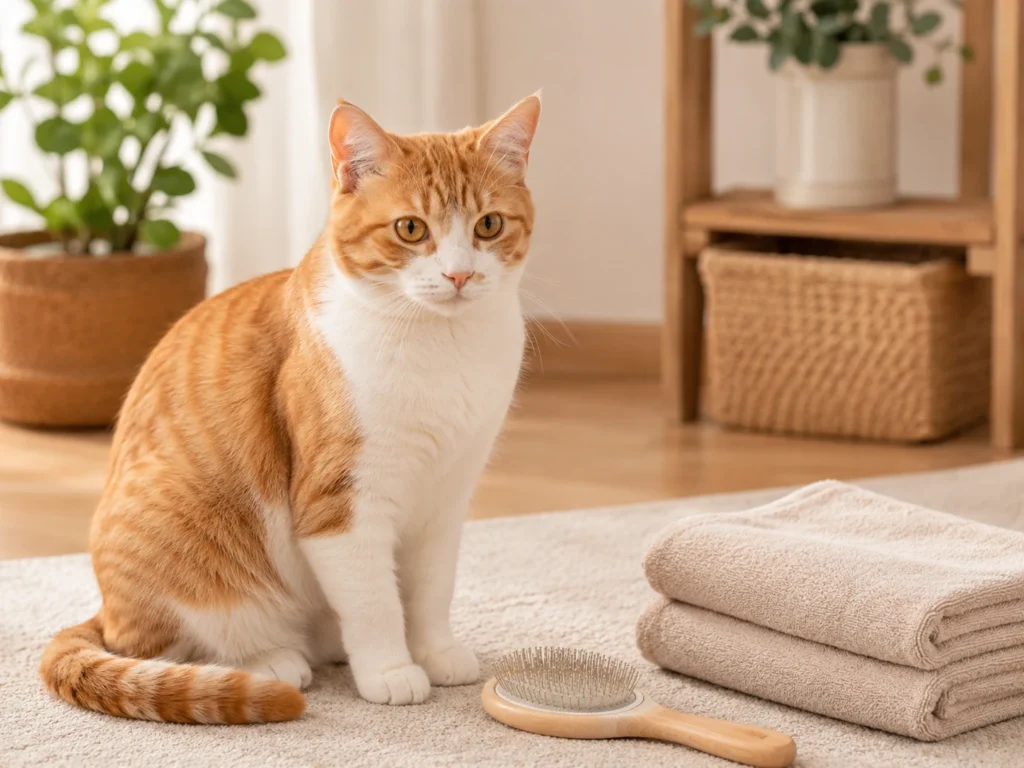
If your cat walks away when you brush them, it can feel frustrating, especially when you are trying to help. But most cats do not move away during grooming because they are being difficult. They are usually telling you that something about the session feels uncomfortable, too intense, badly timed, or unfamiliar.
Some cats enjoy a few gentle strokes with a brush. Others only tolerate grooming for a short time. Some cats are fine with their back being brushed but dislike their belly, back legs, tail base, or hips being touched.
If your cat moves away, stop brushing and let them leave without following. The goal is not to force your cat to accept grooming. The goal is to make grooming feel calmer, shorter, gentler, and safer.
Quick Answer
Your cat may move away when you groom them because the brush feels uncomfortable, the session is too long, the pressure is too firm, or a sensitive area is being touched. Cats may also avoid grooming if they are overstimulated, stressed, nervous, dealing with mats or tangles, or remembering a previous bad grooming experience.
If this behavior is sudden, painful, extreme, or linked with new coat changes, skin problems, mats, bald patches, or signs of illness, contact a vet first. A cat-experienced groomer can help with suitable nonmedical coat care when health concerns are absent or under veterinary direction.
Why This Happens / What It Means
Your Cat May Be Overstimulated
Many cats enjoy gentle contact at first, then suddenly decide they have had enough. Grooming can become overstimulating because it involves repeated touch in the same area.
A cat may start calmly, then begin to twitch their tail, shift their body, look back at the brush, ripple their skin, or walk away. These are signs that the session may be becoming too much. Pause contact at these signs; if your cat walks away, let the session end.
This does not mean your cat hates you or hates grooming forever. It often means the session needs to be shorter.
The Grooming Tool May Feel Unpleasant
Not every grooming tool feels good to every cat. A brush that looks soft to you may feel scratchy, noisy, or too firm to your cat.
Some cats dislike metal combs. Some dislike slicker brushes. Some dislike tools that pull through the coat too strongly. Others are bothered by static, pressure, or the sound of the brush moving through the fur.
If your cat moves away as soon as the tool appears, they may have learned that the brush usually leads to an unpleasant experience.
Some Areas Are More Sensitive
Cats often have clear opinions about where they do and do not want to be touched. A cat may accept brushing along the shoulders and upper back but move away when you brush near the belly, tail base, hips, back legs, or armpits.
These areas can be more sensitive, harder to reach, or easier to pull accidentally. Some cats also feel more vulnerable when certain parts of the body are handled.
Starting with easy areas is usually better than trying to groom the whole cat in one session.
Mats, Tangles, or Skin Sensitivity Can Make Grooming Uncomfortable
If your cat has mats, tangles, dandruff, irritated skin, parasites, wounds, or sore spots, grooming may pull on the skin or feel painful.
Mats can be especially uncomfortable because they may sit close to the skin. Trying to brush through them can make the cat react quickly, even if you are being careful.
This is one reason sudden grooming resistance matters. If your cat used to tolerate brushing but now flinches, growls, bites, or moves away sharply, there may be an underlying discomfort that needs veterinary attention.
The Timing May Be Wrong
Even a cat that usually accepts grooming may move away if the timing is wrong.
Your cat may be less tolerant if they are hungry, excited, sleepy, playful, stressed, distracted, or already annoyed. Brushing a cat during zoomies, after a stressful event, or when they are trying to rest may make the whole experience harder.
A relaxed moment is usually better than a moment when your cat is already busy or tense.
Your Cat May Not Trust the Grooming Routine Yet
Some cats need time to understand that grooming is safe. If your cat has been chased with a brush, held down, brushed for too long, or groomed through painful tangles in the past, they may move away before the session even begins.
Trust grows when grooming feels predictable. Short, calm sessions help your cat learn that the brush does not always mean discomfort or a long struggle.
Sudden Resistance Can Be a Warning Sign
A cat that has always disliked brushing may need a gentler routine, but longstanding dislike does not rule out discomfort. Sudden resistance deserves more attention.
If your cat suddenly moves away, flinches, cries, bites, hides, or reacts strongly to one area being touched, stop and contact a vet. Sudden changes can sometimes be connected to pain, skin irritation, injury, mats, parasites, or another health issue; the reaction alone does not tell you the cause.
What To Look For
Mild Avoidance Signs
Mild avoidance usually means your cat is uncomfortable or close to reaching their limit.
Look for signs such as:
- stepping away
- turning the head toward the brush
- shifting position
- twitching the tail
- rippling the skin
- licking themselves after being brushed
- gently blocking the brush with a paw
- leaving the area calmly
These signs tell you to pause brushing. If your cat steps away or leaves, end the attempt and give them space; do not follow. Do not keep brushing by changing areas or reducing pressure while your cat is uncomfortable.
Stronger Stress Signs
Stronger stress signs mean the grooming session should stop.
These may include:
- flattened ears
- growling
- hissing
- swatting
- biting
- tense body posture
- hiding
- fast escape attempts
- repeated attempts to flee
- panic when the brush appears
If your cat reaches this point, the session has already gone too far. Stop calmly and give your cat space.
Possible Discomfort or Pain Signs
Some grooming reactions may suggest discomfort beyond normal dislike.
Watch for:
- flinching when one area is touched
- crying or sharp vocalizing
- sudden aggression
- guarding one part of the body
- bald patches
- wounds or scabs
- fleas or other parasites
- severe dandruff
- mats close to the skin
- greasy or dirty coat
- your cat no longer grooming themselves
These signs do not mean you should diagnose the problem yourself. They mean it is safer to contact a vet for assessment.
What To Do
Keep Grooming Sessions Very Short
Start with seconds, not minutes.
Try this only if your cat is comfortable, voluntarily stays with you, can leave freely, and has no concerning pain, skin, coat, or mat changes. One or two gentle brush strokes may be enough, but there is no number to complete: the attempt can end before the first stroke. Pause contact at any discomfort; if your cat moves away, let the attempt end without following. A short comfortable session is much better than a long stressful one. Once your cat is more comfortable, use a brushing frequency suited to their coat and individual needs rather than forcing a long session.
Build up only if your cat remains comfortable and chooses to participate; there is no timetable.
Choose a Calm Time
Pick a time when your cat is already relaxed. This might be after a nap, after food, or during a calm moment when your cat has chosen to sit near you.
Avoid grooming when your cat is racing around, hiding, eating, playing intensely, or trying to sleep deeply.
Good timing can make the same grooming tool feel much less threatening.
Let Your Cat Inspect the Tool First
Before brushing, let your cat sniff or look at the grooming tool. You can place it nearby without using it right away.
This helps the brush become a normal object instead of something that suddenly appears and starts touching them.
Some cats need several calm introductions before they accept even gentle grooming.
Use Gentle Pressure and Easy Areas First
Start with areas your cat already likes being touched. For many cats, this means the cheeks, shoulders, neck, or upper back.
Use light pressure. Watch your cat’s body language. If your cat turns away, tenses, or moves off, stop.
Avoid sensitive areas at first, especially the belly, tail base, back legs, hips, and armpits.
Reward Calm Cooperation
You can use praise, treats, or a calm break to help your cat build a better association with grooming.
Reward calm, voluntary cooperation, but do not use a treat to keep your cat in place through discomfort or lure them back after they leave. Stop contact when they withdraw; they do not have to stay still or earn a reward before being allowed to leave.
Stop Before Your Cat Has To Escape
This is one of the most important changes.
Do not wait until your cat runs away, bites, or hides. End the session while things are still calm. This teaches your cat that grooming has a predictable ending and that they do not need to fight to make it stop.
Stopping early is not failure. It is part of building trust. For a healthy, comfortable cat, teaching a chin rest for cooperative care can provide a separate start-and-pause signal during gentle practice; it does not replace assessment of pain or other causes of grooming avoidance.
Change the Tool If Needed
For a later attempt, if your cat is comfortable and has no concerning changes, you can try a different type of grooming tool. Some cats prefer a softer brush. Some tolerate a grooming glove better. Some need a comb suited to their coat type.
The best tool is not always the strongest tool. It is the one your cat can tolerate safely and calmly.
For a practical guide to choosing a gentler tool by coat type and sensitivity, see What Type of Brush Is Best for Your Cat?.
Get Help With Mats or Painful Areas
If your cat has mats, tight tangles, or painful areas, do not try to force the brush through them. Do not cut mats out with scissors at home. Cat skin is delicate, and mats can sit very close to the skin.
Our guide to what to do if your cat has matted fur explains how to distinguish a loose surface tangle from a true mat and when to seek help. Contact a vet first if there is pain, tight matting, or a skin concern.
When To Contact a Vet or Professional
Contact a vet first if your cat’s grooming resistance is sudden, intense, or linked with pain, skin or coat changes, or signs of illness.
This is especially important if:
- your cat reacts as if grooming hurts
- your cat suddenly hates being touched in one area
- there are mats close to the skin
- there are wounds, scabs, bald patches, or swelling
- you see fleas, parasites, or skin irritation
- dandruff is severe or getting worse
- your cat has stopped grooming themselves
- your cat panics, bites, or becomes aggressive during grooming
- you cannot groom your cat safely at home and are unsure whether pain or a health problem is involved
If home grooming is unsafe, stop rather than trying to finish. A cat-experienced groomer can help with suitable nonmedical coat care when health concerns are absent or under veterinary direction. You do not need to wait for a problem to become severe before asking for help.
Common Mistakes To Avoid
Forcing the Cat To Stay
Holding your cat down may seem like the fastest way to finish the job, but it can make future grooming much harder.
If your cat learns that brushing means being trapped, they may hide, fight, or panic the next time the tool appears.
Grooming for Too Long
Many grooming problems come from sessions that last too long.
A cat may accept ten seconds of brushing but reject five minutes. That does not mean the ten seconds were pointless. It means that is the current starting point.
Starting With Sensitive Areas
Do not begin with the belly, tail base, back legs, or matted areas if your cat already dislikes grooming.
Start with easier areas first. Build trust before attempting harder spots.
Using the Wrong Tool or Too Much Pressure
A brush that works well for one cat may be wrong for another. Long-haired cats, short-haired cats, older cats, nervous cats, and cats with sensitive skin may all need different approaches.
Gentle pressure matters too. If the brush pulls, scratches, or drags, your cat will naturally want to move away.
Ignoring Warning Signs
Tail twitching, skin rippling, tense posture, head turning, and shifting position are not random. They are early signals.
Listening to those signs helps you stop before your cat feels the need to escape.
Trying To Cut Mats Out Yourself
Mats can be risky to remove at home, especially if they are tight or close to the skin. Scissors can easily cut delicate skin, even when you are trying to be careful.
Ask a vet first about painful or tight mats, mats close to the skin, or associated skin changes. Other difficult coat care may suit a cat-experienced groomer if there are no health concerns.
Helpful Related Guides
If your cat moves away during grooming, these related guides can help you understand grooming comfort, stress, nervous behavior, and when extra help may be useful:
- How to Groom Your Cat at Home
- How Can I Tell If My Cat Is Stressed?
- How Can I Help a Nervous Cat Feel Safe?
- Why Has My Cat Stopped Grooming Herself?
- Should Cats Be Professionally Groomed?
FAQ
Final Thoughts
If your cat moves away when you groom them, they are giving you useful information. Something about the session may feel too long, too intense, uncomfortable, badly timed, or unfamiliar.
The best response is not to force grooming. Keep sessions short, use gentle tools, avoid sensitive areas at first, and stop before your cat becomes stressed.
Over time, grooming can become calmer and easier. But a sudden, painful or extreme reaction, new skin or coat changes, mats, bald patches, aggression, or stopped self-grooming calls for veterinary advice first. A cat-experienced groomer can help with suitable nonmedical coat care when health concerns are absent or under veterinary direction.