Your cat may chew their claws as part of normal grooming. A few nibbles among paw licking, face washing, and other familiar grooming movements are different from repeatedly biting the same toe or working at a paw that looks sore.
Look at the pattern and your cat’s comfort. New or persistent chewing, limping, bleeding, swelling, or a damaged claw deserves veterinary attention. Do not assume that the behavior is a nervous habit—or that chewing means the claws are maintaining themselves successfully.
Claw Attention Can Be Ordinary Grooming
Cats use more than their tongues when they groom. The Feline Veterinary Medical Association’s routine-care guidance includes nail biting among the behaviors caregivers may normally see, alongside coat washing and scratching.
Claws also grow in layers. Scratching helps remove a worn outer layer, exposing newer growth beneath it. That explains why a shed claw covering is not automatically a broken nail. It does not mean you should pull at an attached layer to help it come off. Shedding changes the outer covering; retracting moves the claw with the last toe bone.
The reassuring picture is a cat whose grooming looks familiar, who moves on to another activity, and who walks and uses their paws comfortably. Those observations support ordinary grooming; they cannot rule out a problem if the behavior has changed.
Notice What Has Changed
There is no useful universal number of nibbles that separates normal grooming from a problem. Compare what you see with your cat’s usual routine:
- Is the attention brief and part of washing, or does your cat repeatedly return to one claw?
- Has the pattern started suddenly or become more intense?
- Does it interrupt sleep, play, eating, or other ordinary activity?
- Is your cat limping, holding a paw up, avoiding a jump, or reacting differently to touch?
- Can you see missing fur, redness, swelling, discharge, blood, or an unusual-looking nail?
A short video and a note of which paw is involved can help your veterinarian. Record the behavior from a comfortable distance rather than repeatedly interrupting it to make your cat demonstrate the problem.
Possible Reasons for Persistent Chewing
A broken or torn claw can be painful, even when the injured piece looks small. Overgrown claws can also curl toward or into a paw pad. These are reasons to have the paw assessed, not invitations to remove or shorten the problem area yourself.
The attention may involve the skin around the claw rather than the claw itself. Irritation, a wound, debris, or an itchy skin condition may be relevant. Appearance alone cannot distinguish these possibilities or establish that an infection is present.
Stress can contribute to excessive grooming, but it should not be the default explanation for repeated paw chewing. Physical discomfort and behavioral factors can overlap. If the licking or chewing extends beyond the toes, our overgrooming guide covers that broader pattern.
Take a Gentle Look If Your Cat Allows It
Choose a moment when your cat is relaxed and willing to stay near you. Look at the paw in good light without pulling the leg into an awkward position. If a light touch is comfortable, briefly support the paw and look around the toes, pads, and visible claws.
- Note where the chewing occurs and whether that area looks different from the other paws.
- Look for a split, loose or oddly angled claw, a nail curving toward the pad, or a visible skin change.
- Stop if your cat tenses, withdraws, growls, or appears painful.
- Leave attached claw layers, embedded material, and injured tissue alone.
You do not need to expose every nail or finish an examination. Our guide to grooming avoidance explains why early withdrawal signals matter. If your cat will not comfortably allow a look, describe that to the veterinary team.
When to Contact Your Veterinarian
Contact your veterinarian promptly if chewing is new and persistent, repeatedly targets one area, or comes with skin or claw changes. Mention altered walking, reduced activity, or reluctance to be touched even if the paw looks normal from outside.
A bleeding or torn nail, swelling, discharge, or a claw entering the pad needs veterinary assessment. Seek urgent help for substantial or continuing bleeding, severe pain, or inability to bear weight. Call the clinic for handling and transport advice if touching the paw could hurt your cat or lead to a bite.
Do not apply bitter deterrents, human creams, essential oils, or an improvised bandage to stop the chewing. Ask the veterinarian whether the paw needs protection and exactly how to provide it. Preventing access to the paw does not identify or treat the reason your cat is chewing.
Keep Routine Care Comfortable
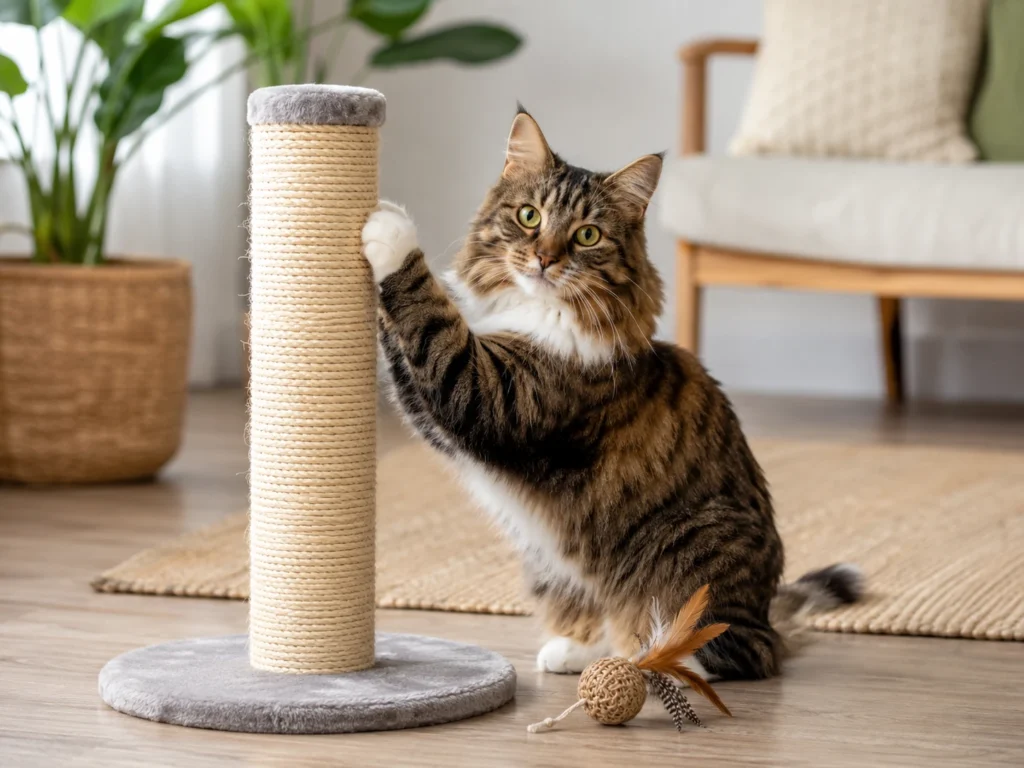
Continue to offer stable scratching surfaces your cat already uses. Why cats scratch furniture explains the wider role of scratching and suitable alternatives. A scratcher supports normal behavior; it does not fix a painful claw.
Check claws as part of your usual home grooming routine, especially when your cat becomes less active. For healthy claws that need ordinary shortening, follow the separate nail-trimming guide. An abnormal or painful claw belongs with the veterinary team.
An occasional nibble does not need punishment or constant interruption. Your job is to notice a meaningful change, respect your cat’s handling limits, and get help when the pattern suggests discomfort.
Helpful Related Guides
- How to Trim Your Cat’s Nails Safely
- Why Is My Cat Overgrooming?
- How to Groom Your Cat at Home
- Why Does My Cat Move Away When I Groom Them?
- Why Does My Cat Scratch the Furniture?