Yes, cats can get sunburn. Pale skin and areas with little fur, especially the ears and nose, are more vulnerable to damage from the sun’s ultraviolet (UV) rays. Start by reducing direct exposure, including at favorite sunny windows, and ask your veterinarian before applying sunscreen.
If you have already noticed new redness, scaling, crusts, or a sore, contact your veterinarian promptly rather than trying to treat presumed sunburn at home. Changing the resting spot is useful prevention, but it does not tell you what caused a skin change.
Sun Protection Is Different From Keeping Cool
A comfortable room temperature does not answer the question of how much sunlight reaches your cat’s skin. Cooling the room and reducing direct sun exposure are separate jobs. A shaded resting option may help with both, but a fan or air conditioning is not a substitute for reviewing a daily sunbathing spot.
This guide focuses on skin exposure. For the household cooling plan, including hot spaces and what to do if cooling fails, see How to Keep Your Cat Cool in Hot Weather. Suspected heat illness needs immediate veterinary contact, not more work on a sun-protection checklist.
Look at Exposed Skin, Not Just Coat Color
A white coat is an obvious reason to pay attention, but the useful question is where skin has little pigment or fur protecting it. A mostly dark-coated cat can still have pale ears or a pink nose. The Canadian Veterinary Medical Association’s sun-exposure guidance explains the protective role of pigment and hair, and why exposed or sparsely covered skin needs extra care.
Notice the ear tips, nose, and other naturally exposed areas during ordinary, comfortable interaction. You do not need to restrain the cat or part every patch of fur to make a prevention plan. A darker coat is not a reason to ignore a skin change.
Thin or recently clipped fur can also leave less protection. If your cat has been clipped for a veterinary procedure, follow the clinic’s individual care instructions. Deciding whether clipping is appropriate is a separate question, covered in Should You Shave Your Cat?, not a sun-protection technique to try at home.
Pair those observations with the cat’s actual routine. A pale-eared cat resting away from direct sunlight has a different exposure pattern from one spending long stretches in a bright window. Appearance alone cannot tell you whether a particular routine is suitable.
Change the Exposure Before Shopping for Sunscreen
Cats Protection’s sunburn information sheet and VCA’s solar dermatitis guidance both support reducing sun exposure. The practical aim is to make less exposed resting choices genuinely usable, not simply to put a shaded bed somewhere and assume the cat will choose it.
Check Favorite Indoor Sunbathing Spots
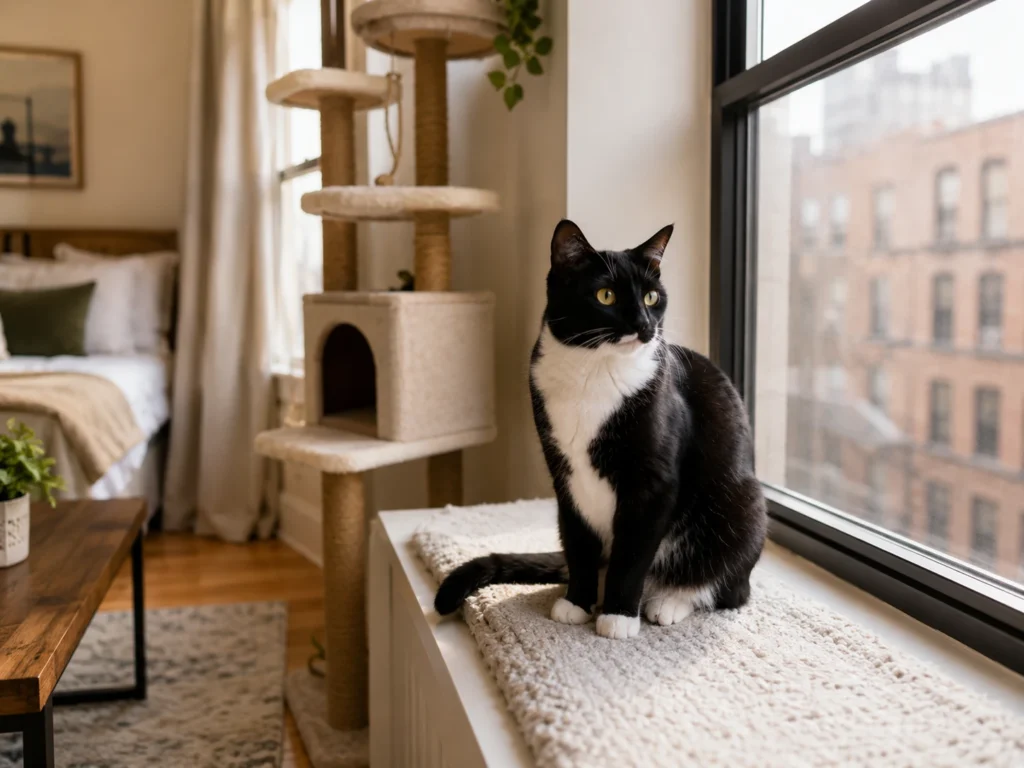
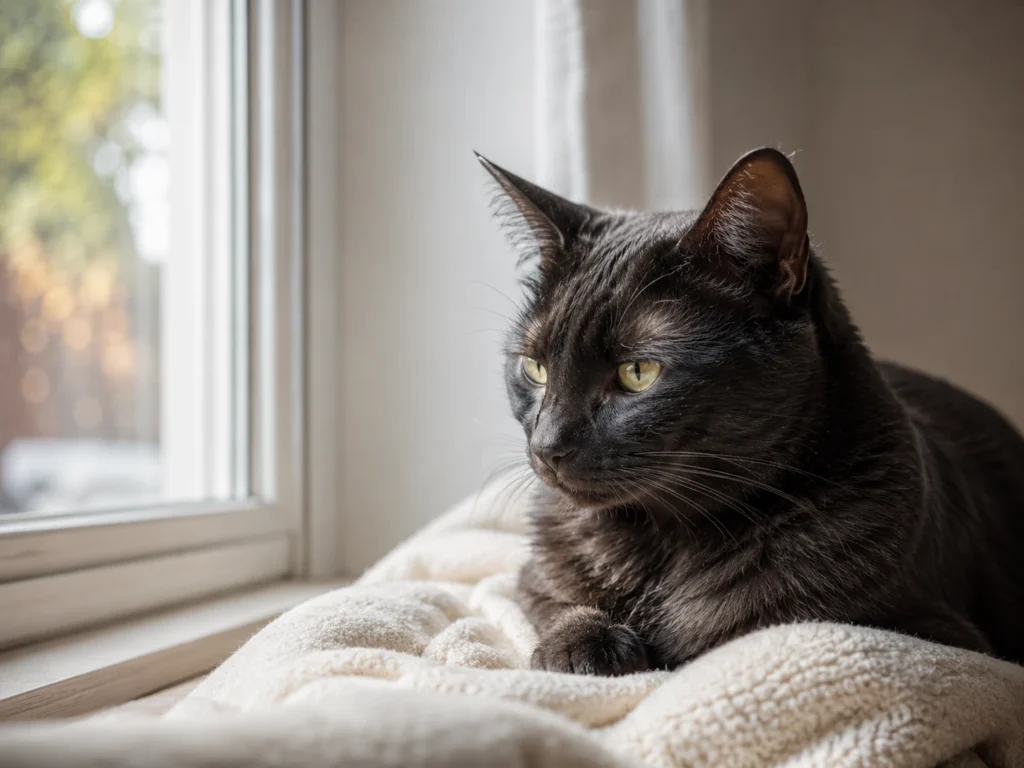
Include indoor cats in the review. A closed window is not a guarantee against sun-related skin damage. Pet Poison Helpline’s feline sunburn guidance specifically discusses cats resting in sunny windows. That does not establish how much protection your particular glass provides.
Look at the place while your cat usually uses it. Does direct sunlight reach the cat’s ears and face? Does the patch spread across the whole bed later? Can the cat leave easily, or does a curtain or closed door restrict the route?
Use existing curtains or blinds to reduce direct sunlight where practical, keeping cords inaccessible and the exit clear. Offer a familiar resting surface outside the beam. A lower, easily reached spot may be more useful than a shaded perch the cat struggles to reach. You do not need to buy a new bed before trying a better location for an existing suitable one.
Do not enclose the cat between a window and a curtain or shut the cat into an uncomfortable room to control exposure. For changes involving a mounted resting platform, use the separate cat window perch safety and setup guide; shade does not establish that the hardware or access route is safe.
Review Outdoor Access and Moving Shade
If your cat already uses an appropriate outdoor space or enclosure, include that routine rather than treating outdoor shade as a complete answer. Reduce direct exposure, especially when sunlight is strongest, and keep a comfortable indoor alternative available. A vulnerable cat may need a more restrictive individual plan from the veterinarian.
Check where the shade actually falls while the cat is there. A covered corner is not useful if the cat cannot reach it, another cat blocks it, or sunlight later moves across it. The cat must be able to leave the sunny area without being trapped in an enclosure or hot hiding place.
There is no universal number of sunbathing minutes that this guide can call safe. Nor does moving an outing to a different clock time guarantee protection. Use exposure reduction as the starting point and ask your veterinarian what additional limits fit your cat.
A Hypothetical Window-Resting Change
Suppose a white-eared indoor cat likes sleeping on a low sofa beside a window. The owner has kept the room cool and assumed that closed glass settles the sunburn question.
Instead of removing access to the room, the owner adjusts the curtain to shade the sofa and offers the cat’s familiar mat in a nearby spot outside the moving beam. The route between both resting places remains open. Later, the owner notices that the sun reaches the mat too, so changes its location again.
The useful change is reduced direct exposure with a comfortable alternative, not a claim that the room is now UV-proof. If the owner notices a new crust on an ear, that becomes a veterinary question even though the resting arrangement has improved.
Ask Your Veterinarian Before Using Sunscreen
Sunscreen is not a replacement for managing exposure. Cats can lick it off, reducing the coverage and swallowing the product. VCA highlights this practical limitation, while Cats Protection directs owners to veterinary advice about suitable sunscreen.
Do not select a product for your cat simply because it says “human,” “baby,” “child,” or “pet” on the label. Ask your veterinarian whether a topical product is appropriate for this cat and, if so, which exact product and instructions to use. This guide does not recommend a brand, SPF, amount, or reapplication schedule.
Make the question specific: explain where your cat rests, which areas have little fur or pigment, and what exposure changes you can make. If applying a recommended product is not manageable without a struggle, tell the veterinary team rather than forcing the cat or quietly substituting something else.
Already red, crusted, or broken skin calls for assessment, not a sunscreen trial. Do not add household burn creams or other home remedies while trying to decide what the patch might be.
Get New or Recurring Skin Changes Checked
Contact your veterinarian promptly if you notice new redness, dry scaling, crusts, or sores, particularly on exposed ears or the nose. Mention a spot that seems to heal and then returns. Cats Protection’s veterinary information sheet recommends prompt advice at the first signs of sun damage; you do not need to wait for a larger wound before calling.
One reason not to dismiss a small recurring scab is that sun-associated skin cancer can begin with a subtle lesion. Cornell’s discussion of squamous cell cancer explains that early skin lesions can resemble a small scratch or scab. This does not mean every crust is cancer, or that an owner can distinguish sunburn from other causes by appearance.
Tell the clinic when you first noticed the change, whether it has returned before, and where your cat spends time in direct sunlight. Arrange the assessment and follow the team’s advice. Reducing exposure while you arrange care is sensible, but it is not treatment for an undiagnosed lesion.
For everyday prevention, focus on the part you can change: less direct exposure, usable resting alternatives, and a veterinary plan where the individual cat needs one. A comfortable cat in a sunny spot may still need a different arrangement; a skin change needs more than a new arrangement.
Helpful Related Guides
- How to Keep Your Cat Cool in Hot Weather
- Should You Shave Your Cat?
- Cat Window Perches: Safety and Setup Guide
Sources
View Sources and References
Cats Protection: Sunburn Information Sheet, VET_7701. Supports vulnerability of lightly pigmented or sparsely haired skin, exposure reduction, veterinary advice before selecting sunscreen, and prompt advice for skin changes. Its clock-time examples are not used as universal exposure limits.
Canadian Veterinary Medical Association: The Effect of Sun Exposure on Animals. Veterinary guidance on pigment, hair cover, sun-related skin damage, and sunscreen limitations. This article uses the skin-protection guidance, not its broader nutritional or treatment material.
VCA Animal Hospitals: Solar Dermatitis in Cats. Supports exposure reduction, signs of sun-related skin damage, and the limits of sunscreen when cats groom it off. Its diagnostic and treatment information is not a home-care protocol.
Pet Poison Helpline: Sunburn in Companion Animals, Part 1: Cats and Dogs. Supports including indoor cats at sunny windows in prevention planning. Used qualitatively, not to claim a UV transmission percentage, a safe exposure duration, or protection from a particular glazing product.
Cornell Feline Health Center: Squamous Cell Cancer: Dangerous. Supports veterinary assessment of small or recurring skin lesions and explains the association between sunlight and some skin cancers. Oral cancer, diagnosis, treatment, and prognosis are outside this article’s scope.
The household checks and hypothetical example are Catcredo’s practical application of this guidance, not a tested prevention protocol or a guarantee against sun damage.