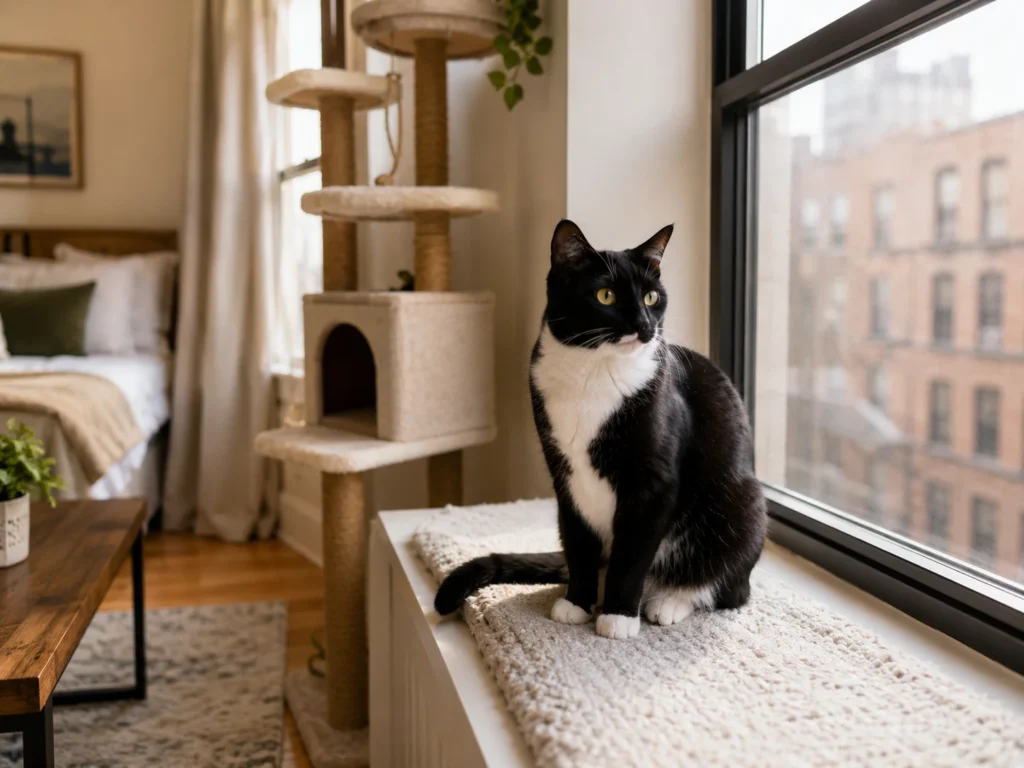
Choose a kitten if you can make room for frequent supervision, play, and patient teaching while accepting that the adult cat they will become is still an unknown. Consider an adult if you want to start with more information about a particular cat’s habits and needs. Either choice depends on the individual, and waiting is a sensible outcome when the care you can offer doesn’t fit.
Deciding whether to adopt a kitten or an adult cat becomes easier when you compare an ordinary week in your home with the cat’s actual daily life. An age label can help you begin that comparison. It can’t finish it for you.
Start With the Week You Can Actually Offer
Before looking at individual cats, describe your normal schedule, including its difficult days. A flexible weekend tells you little about what happens when everyone is working, a child is home sick, or your usual helper is away.
Best Friends Animal Society’s pet-selection guidance highlights time, housing permission, money, and a backup caregiver. Turn those broad considerations into a practical picture of your household:
- Who will provide care before work, during the day when needed, and in the evening? Name the person rather than assuming someone will be available.
- Where can the cat rest undisturbed, and can you manage access to rooms or separate pets when necessary?
- Which parts of your routine can change? Distinguish an arrangement you already have from one you hope an employer, roommate, or relative will agree to.
- What happens during travel, overtime, or illness? Include the availability and cost of backup care.
Use this picture to identify your firm limits. Perhaps you can offer plenty of evening interaction but cannot interrupt daytime work. Perhaps you have time for play but cannot manage a demanding coat-care routine. Those are different constraints, and choosing an adult does not automatically solve either one.
Also separate a preference from a requirement. Enjoying the idea of a kitten is a preference. Being unable to supervise one adequately is a practical limit. Wanting a cuddly companion is understandable, but neither age group comes with a promise of being held or sitting on your lap.
What Changes With Life Stage?
Age categories are useful shorthand rather than precise descriptions of behavior. The 2021 AAHA/AAFP feline life-stage guidelines distinguish kittens, young adults, mature adults, and seniors while emphasizing individual variation and the limits of age boundaries. A young adult and a senior should not be treated as interchangeable simply because both are past kittenhood.
For adoption, the useful question is what a particular cat needs now, what remains to be learned, and whether you can adapt as those needs change.
Supervision and Learning
The San Francisco SPCA’s adoption guidance describes kittens as needing substantial attention, a kitten-proofed home, and help learning household routines. That makes availability throughout the day an important part of the choice.
Being physically at home is only part of availability. If you work from home, consider whether you can pause to check on a kitten or whether long stretches of meetings leave you unavailable. Plan who takes over when you cannot supervise, and discuss that arrangement with the rescue before committing.
Think beyond watching the kitten run around. You will be maintaining a safe environment, responding consistently to unwanted play, and making ordinary care manageable. The AAHA/AAFP life-stage checklists include helping kittens become accustomed to gentle handling, brushing, carriers, and veterinary visits. They also discourage using hands or feet as toys.
An adult may already have familiar routines you can learn about and continue. However, an adult who needs help with handling, frequent companionship, or a particular care task may require more of your time than you expected. Compare the work described for that cat with your schedule; don’t substitute “adult” for a care plan.
Play and Daily Attention
Kittens can appeal to people who want an active, playful companion, but enjoying play also means making time for it. Our guide to How to Play With a Kitten shows what suitable, supervised play looks like, including brief opportunities that follow the kitten’s interest rather than a fixed daily quota.
Imagine fitting those opportunities around meals, work, and other responsibilities. If your plan depends on the kitten entertaining themselves all day and then being quiet whenever you are tired, reconsider the match before adoption.
Adult cats also need opportunities to play and engage with their surroundings. The AAHA/AAFP checklists include play, toys, scratching places, and resting areas across life stages. The amount and style of activity still need to suit the individual.
A description such as “enjoys several interactive games” is more useful for planning than “young adult.” Likewise, “often chooses a nearby resting spot after play” gives you something concrete to discuss without promising that a cat will follow the same pattern in your home.
Grooming and Hands-On Care
Age is a poor shortcut for grooming workload. Cats Protection’s choosing-a-cat guide points out that coat length affects the time an owner needs to set aside for grooming.
Compare the actual coat and current care routine. A long-haired adult may need more grooming attention than the short-haired kitten you were considering. A short coat, in turn, doesn’t tell you whether a cat is comfortable being brushed or having their paws handled.
For a kitten, consider your willingness to build a gentle care routine as they grow. For an adult, find out what is already manageable and what requires help. If brushing is difficult, the decision includes whether you can follow appropriate guidance and obtain professional support when needed. It isn’t simply a matter of buying a brush.
How to Groom Your Cat at Home explains the separate practical task. At the adoption stage, your job is to decide whether the likely time, handling, and support fit your capacity.
Veterinary Care and Ongoing Costs
Both kittens and adults need a budget beyond the adoption fee. ASPCA adoption guidance recommends planning for veterinary checkups, vaccinations, parasite prevention, and possible emergencies, and establishing care with a veterinarian after adoption. Fees and adoption arrangements vary by organization.
Separate what has already been provided from what you will need to arrange. For a kitten, clarify the remaining early-life care with the rescue and veterinarian. For an adult, review the known care needs just as carefully. Let the veterinarian set the individual plan rather than choosing a cat on an assumed medical schedule.
Then put food, litter, equipment, grooming support if needed, routine care, and unexpected expenses alongside the time required for appointments. A smaller adoption fee does not establish a lower lifetime cost. Neither youth nor adulthood guarantees good health or freedom from future treatment.
If a particular cat has a known condition, ask a veterinarian to explain its practical implications before deciding. You need an understandable care commitment, without having to make your own diagnosis or predict the cat’s future from their age.
Household Fit Can Override an Age Preference
Children and a Busy Home
The relevant comparison includes how children behave around animals and how adults will supervise. Kittens need gentle handling, and a small body should never be mistaken for an easy first pet. The San Francisco SPCA specifically cautions that kittens are not always a suitable match for households with young children.
Consider ordinary moments: a child wants to pick the cat up, visitors arrive noisily, or the cat walks away from play. Can an adult guide the interaction and protect the cat’s opportunity to leave? Where will the cat have quiet time?
An adult with relevant experience may be worth considering, but “has lived with children” still needs context. There is no universal child-age cutoff that resolves this choice, and adult status doesn’t guarantee tolerance of noise or handling. Use the rescue’s knowledge of the individual alongside an honest account of your household.
Resident Pets and Available Space
Adding a cat affects the animals already living with you. Compare the resident pet’s activity, response to other animals, and need for space with what is known about the candidate. A kitten’s size does not guarantee acceptance, and an adult’s previous experience with another pet does not guarantee a match with yours.
The immediate capacity question is whether you can manage a gradual introduction and separate living areas when needed. Our guide to How to Introduce a New Cat to Your Resident Cat covers that process. If the necessary separation is not feasible, resolve it before selecting either age group.
For a home with a dog, discuss the dog’s actual behavior around cats and the candidate’s known experience with the rescue. Don’t rely on the hope that a kitten will simply grow accustomed to the dog.
Space also needs to work for daily life. Look at where rest, play, food, water, and litter will fit without repeated disturbance. A large home does not remove the need for supervision, and a smaller home does not by itself identify the right cat. The usable arrangement matters to the choice.
What Known History Adds to the Decision
One potential advantage of adopting an adult is having more information about an existing routine. Cats Protection recommends learning an adult cat’s likes, dislikes, habits, and character. That information can make a comparison with your home more concrete.
An adult who has spent time in a foster home may have a useful record of daily activity and care. Another adult may arrive with very little history. A kitten’s caregiver may know a great deal about their current needs, while their eventual adult preferences remain uncertain. The value lies in the information available, rather than the label alone.
Keep the setting attached to an observation. “Played readily in a quiet foster room” is narrower than “will be confident anywhere.” The San Francisco SPCA notes that behavior observed in a shelter can be difficult to translate into a new home, and that a mildly shy cat may become more active as they settle.
A first meeting therefore adds information without settling the whole question. Avoid choosing a quiet-looking cat solely because you need a quiet companion, or dismissing one solely because they are reserved with you. Check what caregivers have observed over time and which parts remain unknown.
Once you have an age preference or a shortlist, What to Ask a Shelter Before Adopting a Cat takes you through the individual-cat conversation. Use it to test the fit you are considering rather than treating your initial preference as a decision already made.
Two Households, Different Decisions
These examples are hypothetical. They illustrate how to use the comparison, rather than predicting an adoption outcome.
A Kitten-Friendly Schedule Leads to an Adult Match
Alex works from home with genuine breaks between appointments. Their partner can take over during uninterrupted work periods, and they have already arranged a safe room and backup care. They initially prefer a kitten because they enjoy active play and are willing to make time for supervision and learning.
The rescue also describes an adult cat whose foster caregiver reports enthusiastic daily play, comfortable brushing, and a habit of resting nearby afterward. Alex had assumed that an adult would be less interested in games. This information changes the shortlist: the adult offers the interaction Alex wants, with a current routine they can discuss in detail.
Alex compares that routine with the household’s workday and reviews the known care needs before choosing the adult. The decision rests on this cat’s observed life and the household’s capacity. It does not establish that the cat will always behave the same way or that adopting an adult requires less effort.
A kitten could still have been a reasonable option for this household. Having the capacity for a kitten doesn’t mean it is the option that best matches what they want from everyday life together.
An Adult Preference Becomes a Reason to Wait
Mina is away for much of the working day and has a resident cat. She begins by looking for an adult, hoping to avoid kitten-level supervision and find a compatible routine.
A particular adult catches her attention. The rescue’s information, however, describes a cat who seeks frequent human company and needs a home without other cats. Those needs conflict with Mina’s weekday availability and existing household, even though the age category looked right.
Mina also realizes that the room she had imagined using for separation is not currently available. She pauses the search while working out whether she can provide suitable space and reliable care. Switching to a kitten would leave those practical problems unresolved.
This decision does not rule out every adult cat, and it does not mean Mina must never adopt again. It identifies what has to change before another adoption makes sense. The useful result is a clearer condition for restarting the search, rather than pressure to take home a cat that doesn’t fit.
Choose a Starting Point, Then Check the Individual
You can now make a more useful first move:
- If you can provide frequent supervision and patient teaching, explore kittens while remaining open to adults whose needs and activity fit your home.
- If a more established routine would help, look for an adult with relevant information available. Compare that information with your real limits, including any gaps in the history.
- If essential care, safe space, household agreement, or backup support is missing, postpone. Identify the particular problem to resolve before resuming the search.
Fostering may be worth discussing with an organization if a permanent commitment is the obstacle. The ASPCA describes fostering as temporary care in a home. It still requires time, suitable space, and the ability to meet the placement’s needs. Confirm responsibilities and support with the organization; fostering is not a workaround for an inability to provide basic care.
After choosing a suitable individual, move on to helping your cat settle into a new home. The strongest adoption decision gives you a realistic starting plan and room to learn about the cat who actually arrives.
Helpful Related Guides
- What to Ask a Shelter Before Adopting a Cat
- How to Play With a Kitten
- How to Groom Your Cat at Home
- How to Introduce a New Cat to Your Resident Cat
- How to Help Your Cat Settle Into a New Home
Sources
View Sources and References
Choosing the Right Cat for You. Cats Protection. Practical adoption, individual-fit, and coat-care guidance from a UK welfare organization.
Selecting a Cat to Adopt. San Francisco SPCA. Shelter guidance on time, household needs, and the limits of observed behavior.
Tips for Picking a Pet Who’s Right for Your Lifestyle. Best Friends Animal Society. Practical capacity, care, and backup-care considerations.
Navigating Adoption: Finding and Welcoming Home Your Pet. ASPCA. Adoption arrangements, ongoing veterinary responsibilities, and fostering; commercial insurance recommendations are not used here.
Feline Life Stage Definitions. AAHA, 2021 AAHA/AAFP Feline Life Stage Guidelines. Life-stage categories and their limitations.
Life Stage Checklists. AAHA, 2021 AAHA/AAFP Feline Life Stage Guidelines. Veterinary consensus guidance on age-related care, behavior, and environmental needs.