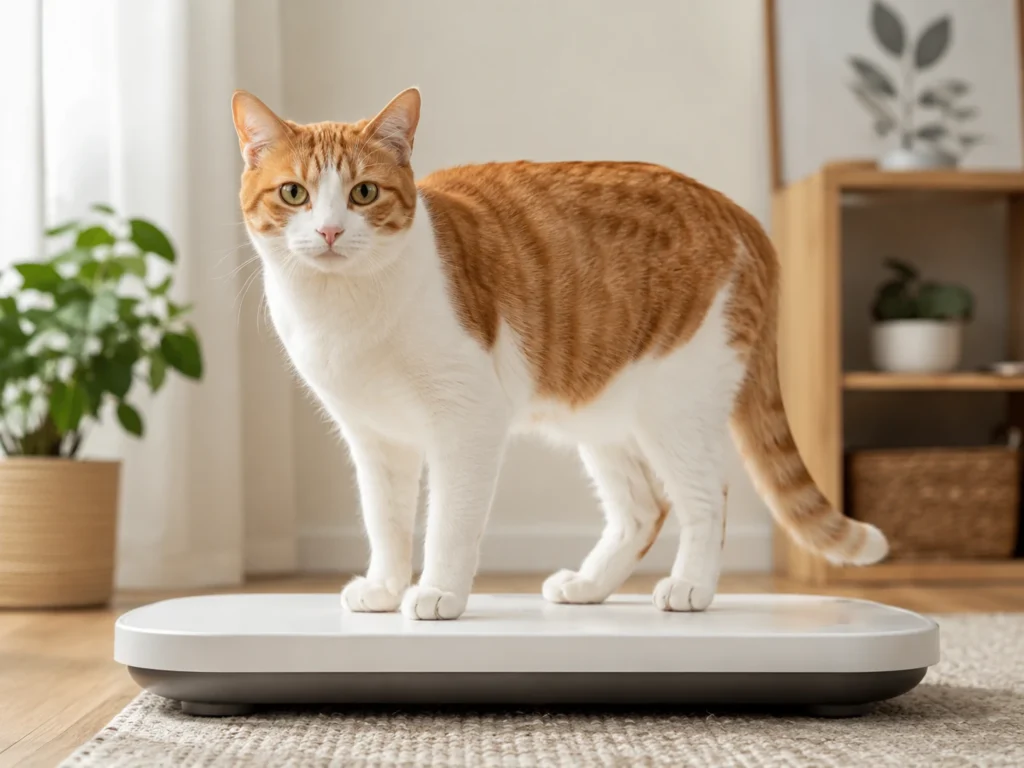
A cat should get used to a harness through small, positive steps indoors. Begin by letting your cat investigate it, then gradually introduce touch, positioning, fastening, and movement. Add a leash only after your cat can walk naturally and remain comfortable while wearing the harness.
Let your cat’s response determine the pace. Freezing, crouching, struggling, or refusing to engage does not mean your cat is calmly accepting the equipment. If those signs appear, remove the harness when it is safe to do so and return to an easier stage later.
Never force, chase, drag, or punish a cat during harness training. A harness is not escape-proof, and a harnessed cat should never be left unattended. Some cats may not become comfortable wearing one, even with careful training.
What Harness Habituation Means
Harness habituation means helping your cat become familiar and comfortable with the harness before it is used for anything more demanding.
The finished behavior is not simply allowing you to fasten the equipment. Your cat should be able to:
- approach the harness without marked avoidance;
- accept the movements needed to put it on;
- remain comfortable while it is fastened;
- walk, turn, sit, and change direction without obvious restriction;
- engage voluntarily with you or the environment; and
- recover normally after each practice session.
This process combines gradual exposure with positive associations. Your cat experiences one manageable part of the harness at a time, while something they value—such as food, play, or attention—helps make that experience worthwhile.
Training begins indoors because a familiar, controlled room makes it easier to observe your cat and prevent escape. It also separates learning to wear the harness from unfamiliar outdoor sounds, smells, people, animals, and movement.
Indoor comfort is a prerequisite for any later step. It does not establish that outdoor walking will be suitable for every cat.
Set Up for Safe Indoor Practice
A little preparation makes it easier to keep the first sessions calm and brief.
Choose and inspect the harness
Choose a harness intended for cats and available in a size that matches the manufacturer’s measurement chart. Harness designs differ, so the correct measuring points, adjustment method, and strap positions depend on the individual product.
Before bringing it to your cat:
- read the fitting and adjustment instructions;
- learn how every buckle and clip works;
- loosen or adjust it close to the expected size;
- check the fabric, stitching, straps, and hardware for damage;
- make sure no strap is twisted; and
- practice fastening and releasing the buckles away from your cat.
This preparation reduces the amount of handling required during the first fitting.
Avoid choosing a harness solely because it looks substantial or feels difficult for you to remove. A secure harness still needs to permit comfortable breathing and natural movement. No particular design should be assumed to be escape-proof.
Secure the practice area
Use a quiet, familiar room with the exterior doors and windows securely closed. Block access to places where a loose strap or leash could catch, and remove unstable objects that could fall if your cat retreats quickly.
Keep other pets and unnecessary people out of the room during early sessions. Your cat should be able to move away, rest, or use a familiar hiding place without being pursued.
Do not conduct a first fitting beside an open exterior door or test the harness by allowing your cat to pull backward toward an exit.
Choose an effective reward
Use something your cat already values. This may be a small food reward, a favorite toy, gentle attention, or access to a preferred resting place.
Food is often convenient because it can be delivered immediately, but it must be rewarding to that individual cat. Use tiny portions and account for them in your cat’s normal daily intake. For more guidance, see How to Use Treats for Cat Training Without Overfeeding.
If your cat is normally enthusiastic about a particular treat but will not take it during training, stress may be interfering. Food refusal is not conclusive by itself, but it should be considered alongside posture, facial expression, breathing, movement, and attempts to leave.
Let Your Cat Investigate the Harness
Place the harness on the floor several feet from your cat, or near an area where your cat already feels secure. Allow your cat to decide whether to approach.
Reward voluntary interest, including:
- looking toward the harness;
- moving closer;
- sniffing it;
- touching it with the nose or paw; or
- remaining relaxed beside it.
Do not move the harness toward your cat every time they investigate. That can teach the cat that approaching makes the equipment advance on them.
If your cat keeps their distance, begin by rewarding calm attention from farther away. You can also leave the harness in a familiar room between supervised training sessions, provided it cannot become a chewing or entanglement hazard.
The goal is not to make your cat interact for a particular length of time. It is to make the harness predictable and unthreatening.
Introduce Contact in Small Steps
Once your cat can investigate the harness comfortably, begin introducing the physical sensations involved in putting it on.
The exact actions depend on the design. A step-in harness requires different movements from one that passes over the head or wraps around the chest. Separate those movements into the smallest practical stages.
For example, you might:
- Bring the harness briefly toward your cat’s shoulder, then move it away and reward.
- Touch the body lightly with one part of the harness.
- Rest it against the back for a moment without arranging the straps.
- Position one section loosely, then remove it.
- Introduce the sounds and movements of the buckles without fastening the complete harness.
If the design passes over the head, reward your cat for voluntarily approaching the opening and, later, placing their nose or head through it. Do not grab the cat or pull the opening over their head while they resist.
If the harness requires a paw to pass through an opening, do not lift or bend the limb beyond what your cat already accepts comfortably. Cats with handling sensitivity, pain, or reduced mobility may require a modified approach or veterinary advice before training continues.
Reward the behavior you want at the moment it occurs. A clicker or verbal marker can help with timing, but it is optional. How to Clicker Train Your Cat explains how to establish and use a marker without confusing or startling your cat.
Fasten the Harness Briefly
Do not wait until the harness is completely fastened to reward your cat. Continue reinforcing each manageable part of the process.
During the first fastening:
- work in the secured practice room;
- position the harness calmly;
- make sure no skin or fur is caught;
- fasten only as much as the design requires;
- reward your cat promptly; and
- remove the harness after a brief successful experience.
The first complete wearing period may last only a few moments. That is enough if your cat remains comfortable.
Try to remove the harness before your cat becomes preoccupied with escaping it. Ending while the experience is still manageable makes the next session easier.
If your cat backs away when you reach for a strap or buckle, stop advancing. Return to rewarding a smaller action, such as touching the strap or hearing the buckle at a greater distance.
Check Fit Without Relying on One Universal Rule
Harness fitting advice is often reduced to a set number of fingers beneath a strap. That may be part of the instructions for a particular product, but it is not a reliable universal formula. Harness shapes, materials, adjustment points, and intended positions vary.
Use the manufacturer’s instructions as the starting point, then assess the harness on your individual cat.
Check that:
- each strap lies in the position intended for that model;
- buckles and adjustment hardware are fully secured;
- straps are flat rather than twisted;
- fur and skin are not trapped;
- the harness is not pressing against the throat;
- straps and edges are not visibly pinching or rubbing;
- the harness remains reasonably centered during ordinary movement;
- your cat can breathe without restriction;
- the shoulders and front legs can move normally; and
- your cat cannot place a leg through an opening during normal movement.
A harness that is too loose may rotate, shift, or allow a cat to back out. One that is too tight can cause discomfort, restrict movement, or create pressure around the neck, chest, or front legs.
Check security with your hands while your cat is standing calmly in the closed room. Do not pull sharply on the harness or deliberately frighten your cat to see whether they can escape.
Longhaired cats need an additional check for trapped or pulled fur. Growing kittens and cats whose weight or body condition changes need to be measured and fitted again rather than relying on a previous adjustment.
Fit should be reassessed whenever the harness is used. A sound fit lowers risk, but it cannot make a harness escape-proof.
Help Your Cat Move Naturally Indoors
Some cats walk immediately after a harness is fastened. Others lower their body, take unusually large steps, roll, or remain motionless because the equipment feels unfamiliar.
Encourage movement without pulling your cat. You can place a treat a short distance away, use a familiar target, or begin a gentle game your cat normally enjoys. Keep the distance small and allow your cat to choose whether to move.
Look for increasingly natural actions:
- walking with a familiar stride;
- turning in both directions;
- sitting or standing normally;
- stepping over a low, familiar threshold;
- approaching you voluntarily; and
- exploring rather than concentrating entirely on the harness.
Avoid repeatedly luring a distressed cat forward with food. A cat may stretch toward a treat while keeping the rest of the body frozen, which is different from comfortable movement.
If your cat remains rigid, crouches deeply, falls onto one side, or appears unable to coordinate normal steps, remove the harness when it is safe and return to an earlier stage next time. A pause of a few seconds followed by voluntary movement may simply reflect uncertainty. Persistent immobility, especially with other stress signals, should not be treated as successful adaptation.
Increase Wearing Time Only While Your Cat Is Comfortable
There is no standard number of sessions or days required for harness training. Some cats progress through early stages quickly, while others need many short repetitions or never become comfortable.
Increase duration only when your cat is showing comfortable behavior at the current stage. Change one part of the exercise at a time. For example, extend wearing time before adding more movement, or practice movement before introducing a leash.
A useful session ends with your cat still able to engage and recover normally. It does not need to continue until the cat becomes tired of resisting.
After removing the harness, observe what your cat does next. Returning to normal activity, resting comfortably, grooming normally, or choosing to interact again suggests the session was manageable. Immediate hiding, prolonged vigilance, avoidance of you, or reluctance to return to the room can indicate that the experience was too intense.
Progress is rarely perfectly linear. A cat who managed a longer session yesterday may need an easier one today. Changes in noise, visitors, health, appetite, or general stress can affect what the cat can handle.
Add a Leash Indoors Only After Harness Comfort
Leash attachment belongs near the end of indoor harness habituation, not at the beginning.
Attach the leash to the harness, never to an identification collar; Should Your Cat Wear a Breakaway Collar? covers that separate decision.
Wait until your cat can wear the harness, move around the room, turn, and engage without persistent freezing, crouching, or attempts to remove it. Then introduce a lightweight leash in the same secured, uncluttered area.
First allow your cat to investigate the leash separately. When that is comfortable:
- Fasten the harness and recheck its fit.
- Attach the leash calmly.
- Hold it with slack rather than applying tension.
- Follow your cat’s voluntary movement.
- Reward comfortable walking and attention.
- End the session before frustration or escape behavior develops.
Do not pull the leash to make your cat walk. Do not use leash pressure to drag a frozen cat forward or prevent a frightened cat from reaching safety within the room.
Allowing a leash to trail can introduce a snag or entanglement risk. If a brief trailing exercise is used, it requires continuous close supervision in a completely cleared space. Holding the leash loosely and following the cat is the more conservative option.
This step teaches your cat that the leash can be present without controlling or frightening them. It is not an outdoor walking lesson.
Know When to Continue, Step Back, or Stop
A single behavior does not always reveal how a cat feels. Look at the complete pattern and compare it with your cat’s usual behavior.
Signs the current stage may be comfortable
Your cat may be ready to repeat or gradually advance when they:
- approach voluntarily;
- maintain a neutral or familiar posture;
- move with an increasingly normal gait;
- respond to a normally valued reward;
- explore or play;
- show neutral ears and relaxed facial muscles;
- choose to remain nearby when free to leave; and
- recover promptly after the harness is removed.
Signs the progression may be too fast
Pause or return to an easier stage if your cat:
- freezes for more than a brief moment;
- crouches or presses close to the floor;
- repeatedly backs away;
- turns the ears sideways or backward;
- has markedly dilated pupils;
- tucks or forcefully lashes the tail;
- bites or claws persistently at the harness;
- refuses a normally valuable reward;
- hides or avoids the training area; or
- becomes less willing to participate over successive sessions.
These signs can also occur for reasons unrelated to the harness. The appropriate response is still to reduce pressure and assess the situation rather than forcing completion.
For broader help interpreting behavior, see How Can I Tell If My Cat Is Stressed?.
Signs to end the session
Stop if your cat shows:
- frantic twisting, rolling, or struggling;
- repeated high-intensity escape attempts;
- hissing, growling, swatting, or biting;
- rapid breathing that does not settle;
- open-mouth breathing;
- apparent pain;
- collapse; or
- an abnormal gait that continues after removal.
Remove the equipment calmly if you can do so without increasing the risk of injury. Do not chase a frightened cat around the room. Secure the exits, reduce noise and movement, and allow enough space for the cat to settle.
Open-mouth breathing, collapse, injury, or severe breathing difficulty requires prompt veterinary attention.
Common Harness-Training Mistakes
Putting the complete harness on immediately
Even a sociable cat may find straps, buckles, body pressure, and restricted choices unfamiliar. Introducing every sensation at once makes it harder to identify which part is causing concern.
Mistaking immobility for cooperation
A cat who does not run or fight may still be frightened. Freezing and inhibition are possible stress responses. Look for normal movement and voluntary engagement rather than the absence of active resistance.
Holding or chasing the cat
Catching a cat and restraining them until the harness is fastened can make both the equipment and your approach predict discomfort. Set up another short voluntary session instead.
If your cat is generally nervous around handling or household activity, How Can I Help a Nervous Cat Feel Safe? covers the wider environmental foundations.
Advancing according to a calendar
A training schedule can remind you to practice, but it cannot determine when your cat is ready. Progress should follow behavior, not a deadline.
Tightening the harness excessively
Making a harness uncomfortable is not a safe way to prevent escape. Use the correct size, follow its fitting instructions, and observe both security and movement.
Testing the harness outdoors too early
A quiet room does not reproduce the intensity of an outdoor environment. Indoor tolerance must be well established before any later decision about outdoor use is considered. Even then, Should You Walk Your Cat on a Leash? explains how to assess whether controlled outdoor exploration is suitable for your individual cat.
Pulling on the leash
Leash tension should not be used to make the cat move. Follow voluntary movement with slack in the line.
Leaving the harness on unattended
A strap can catch on furniture or another object, and the cat may become distressed while trying to remove it. Take the harness off when the supervised session ends.
Never attach a harnessed cat to furniture, a post, or another fixed object.
Assuming the harness prevents every escape
A frightened cat may twist or back out of equipment that appeared secure during calm movement. Harness use therefore requires supervision and environmental precautions. Is Your Cat Going to Run Away? covers broader escape-prevention planning.
Punishing avoidance or struggling
Shouting, spraying water, leash corrections, or physical punishment can make the harness and the person handling it more frightening. Struggling indicates that the exercise needs to become easier or end.
Kittens, Senior Cats, and Cats With Medical or Handling Sensitivities
Age alone does not determine whether a cat can become comfortable with a harness. The process still needs to be individualized.
Kittens
A kitten may be curious about new equipment, but curiosity does not remove the need for gradual training. Keep the harness from becoming a chew toy, supervise every wearing period, and recheck the size frequently as the kitten grows.
Do not assume that starting young guarantees future acceptance.
Senior cats
Senior cats may have arthritis, reduced flexibility, fragile skin, muscle loss, or other conditions that affect fit and movement. A change that looks like resistance could reflect discomfort.
Watch how the cat walks, turns, sits, and responds to touch before and after the harness is introduced. Seek veterinary advice if the cat shows reduced mobility, difficulty standing, touch sensitivity, or a change from their normal behavior.
Cats with limited mobility
A standard walking harness should not be used as an improvised mobility aid. Cats with orthopedic, neurologic, balance, or rehabilitation needs may require individually selected equipment and professional guidance.
Cats with handling sensitivities
A cat who dislikes touch around the shoulders, chest, abdomen, legs, or head may need much smaller training approximations. Work only at an intensity that does not provoke avoidance or defensive behavior.
Sudden sensitivity, particularly when the cat previously accepted touch, should be discussed with a veterinarian because pain or illness may be contributing.
When to Seek Veterinary or Behavior Help
Speak with your veterinarian before continuing if your cat has:
- known pain or reduced mobility;
- recent surgery or injury;
- a skin problem where the harness would make contact;
- breathing or heart-related concerns;
- unexplained difficulty walking;
- sudden intolerance of touch; or
- a major change in behavior or activity.
Veterinary assessment is also appropriate when apparent harness resistance is accompanied by reduced appetite, hiding, decreased grooming, reluctance to jump, difficulty standing, or other changes outside training sessions.
If medical causes have been addressed but the harness continues to provoke intense fear, shutdown, or defensive aggression, consult a board-certified veterinary behaviorist or an appropriately credentialed, reward-based feline behavior professional working with your veterinarian.
Professional support should help reduce fear and preserve choice. It should not rely on prolonged restraint, punishment, flooding, or forcing the cat to remain in the equipment until they stop reacting.
Stopping harness training is a valid outcome. The goal is not to make every cat tolerate a harness at any cost.
Helpful Related Guides
- How to Clicker Train Your Cat
- How to Use Treats for Cat Training Without Overfeeding
- How Can I Tell If My Cat Is Stressed?
- How Can I Help a Nervous Cat Feel Safe?
- How to Get Your Cat Used to a Carrier
Final Thoughts
Getting a cat used to a harness is a process of building comfort, not overcoming resistance. Begin indoors, divide the equipment and handling into manageable stages, reward voluntary participation, and watch how your cat moves and recovers.
A cat who freezes or stops resisting has not necessarily accepted the harness. Comfortable adaptation is better shown through natural movement, normal engagement, and a willingness to participate again.
Even after successful indoor training, no harness is escape-proof, and indoor comfort does not prove that outdoor walking is right for that cat. If your cat remains distressed despite patient, reward-based work, ending the process may be the safest and kindest decision.
Sources
- FelineVMA — Teaching Your Cat to Walk on a Harness and Leash
- FelineVMA — Cat Training Techniques for Caregivers
- FelineVMA — Setting Up the Environment for Success
- AAFP/ISFM — Cat Friendly Veterinary Interaction Guidelines
- Merck Veterinary Manual — Treatment of Behavior Problems in Animals
- Cats Protection — Should I Walk My Cat on a Harness and Lead?
- FelineVMA — How Do I Know If My Cat Is in Pain?
- AAHA — Guiding Principles of Pain Assessment