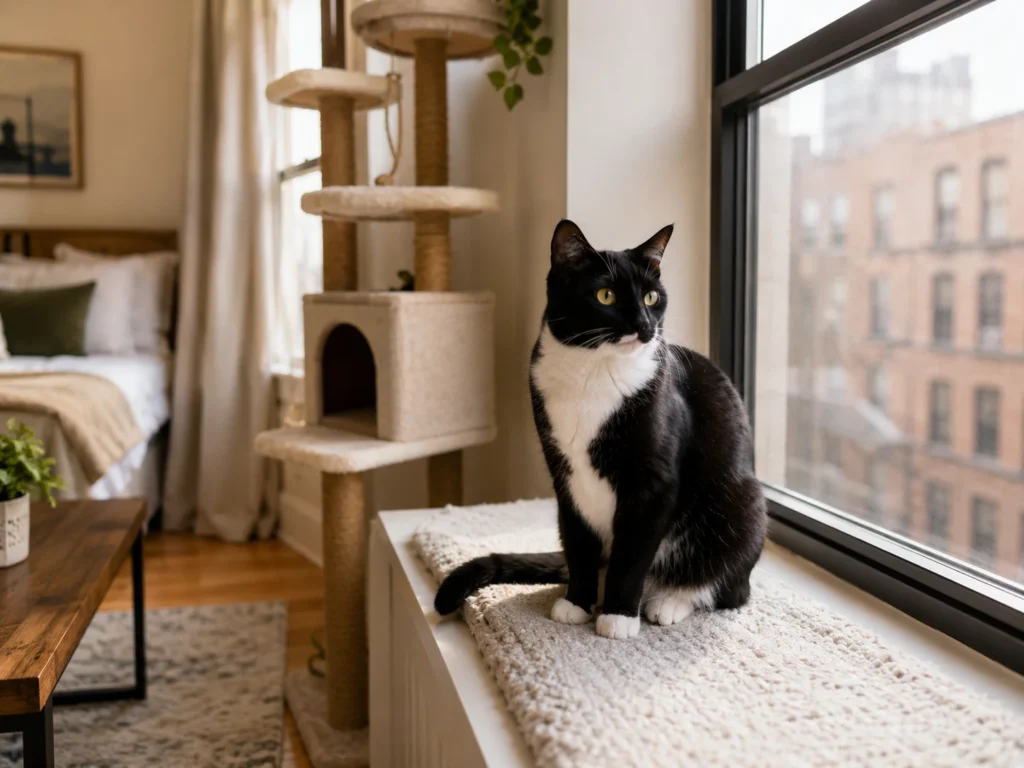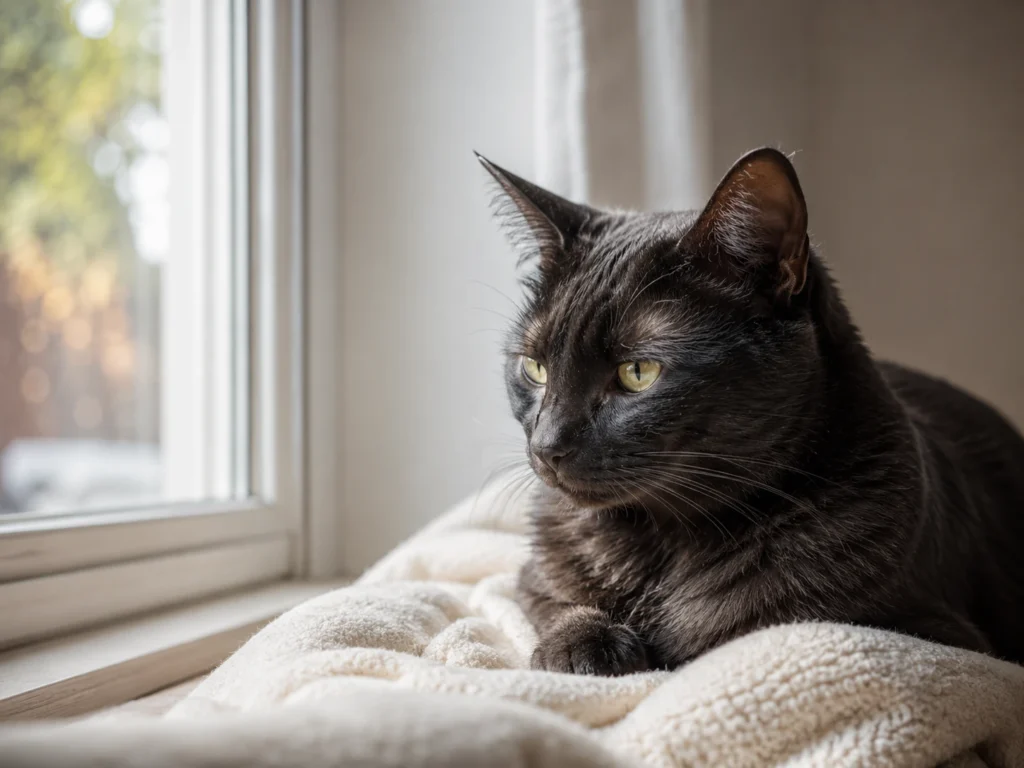
Bird videos for cats are optional. You can try quiet, supervised viewing if your equipment is suitably installed and your cat can leave freely. You can also skip it entirely. Let your cat’s response guide the choice: stop for signs of alarm or attempts to strike or climb the equipment, and keep ordinary play part of their life.
A cat looking at a screen has directed attention toward it. That observation alone doesn’t tell you whether the activity is beneficial or worth repeating.
What Watching Can Tell You
In Cats Protection’s guidance on cats watching TV, clinical animal behaviorist Daniel Warren-Cummings describes different responses to television, including interest and possible frustration. The guidance also acknowledges uncertainty about how cats interpret the images. We shouldn’t assume a cat believes there are real birds inside the device, or that every cat understands the screen in the same way.
For an owner, the useful question is narrower: what happens when this particular cat has the choice to watch or leave? Looking time measures attention. It doesn’t establish improved well-being, relief from boredom, or a reason to keep the video playing longer.
The guidance used here doesn’t establish an ideal home viewing duration or a daily requirement. The checks below are a cautious way to make an optional decision, rather than a tested screen-time program.
When to Skip the Screen
Start with your reason for considering a video. If you want an activity to leave running while you’re out, choose something else. This guide’s viewing option requires someone present and watching the cat, with the playback controls within reach.
Skipping also makes sense when:
- Your cat already paws at, jumps toward, or climbs your television or tablet. You don’t need another demonstration to decide against encouraging attention to that equipment.
- The device, supporting furniture, mount, or cables need attention. Resolve that independently before considering any viewing.
- Your cat has previously moved away or shown alarm when similar sounds or images played. There is no need to repeat an optional activity to make the cat get used to it.
- You would need to hold your cat in place, block an exit, or repeatedly bring them back to the screen.
A cat who ignores a video hasn’t failed an enrichment test. You don’t need a larger screen, more dramatic footage, or a subscription to persuade them. Spend that effort on an activity they already choose to take part in.
Likewise, a settled cat doesn’t need to be woken or moved from a resting spot just because you’ve found a video. An opportunity to watch can wait, or never happen.
Check the Actual Setup First
A screen is still household equipment when it is showing birds. Treat its installation and surroundings accordingly.
Read the setup and safety instructions for your exact device and any stand or mount. Check that the supports, fastenings, furniture, and cable arrangements meet those instructions. If you cannot establish that they do, leave the video trial aside and ask the manufacturer or an appropriate installer about the setup. A stable-looking television or a protective tablet case doesn’t establish that it can withstand a cat jumping at it.
The Cornell Feline Health Center’s toy-safety guidance warns about chewable electrical cords, detachable pieces, and heavy objects that could fall during play. Applying those general hazards to the screen area means checking more than the picture itself:
- Keep electrical cables inaccessible to chewing, and follow the equipment’s directions for routing them. A dangling cable should not become another target.
- Clear objects that could be knocked down if the cat approaches. Include nearby shelves and the furniture supporting the device.
- Avoid an improvised viewing station, such as a tablet balanced against a loose object. A convenient angle is not a stability check.
- Leave an unobstructed route away from the viewing area. Don’t position the cat on a precarious surface to get a better view.
These checks reduce avoidable hazards; they don’t make equipment cat-proof. There is no universal viewing distance offered here that turns a reachable screen into a safe play target. If keeping the setup workable depends on the cat never approaching it, choose a different activity.
Make the First Try Easy to End
Before involving your cat, preview the footage yourself. Check how to pause or stop it, whether sound starts automatically, and whether the player switches to another clip. An unpredictable stream is a poor choice for a controlled first try.
Cats Protection cautions that sudden or loud TV sounds may alarm some cats. Starting muted is a straightforward option; if you use sound, keep it quiet. You don’t need to turn it up to attract attention.
Then keep the trial simple:
- Choose a time when you can stay present without dividing your attention between the cat and another task. Have the playback control ready.
- Leave your cat in a place they have chosen, with room to move away. Start the clip without carrying them toward it or holding them in front of it.
- Watch the cat and the equipment together. Notice whether your cat can look away, remains in place, approaches the device, or leaves.
- Stop playback when you can no longer supervise, when the cat leaves, or when a stop sign appears. There is no session length you need to complete.
Keep a familiar toy available away from the equipment, but don’t use it to lure the cat closer to the screen. The purpose of this first try is to learn whether viewing fits your household, not to produce an impressive reaction.
Let the Response Decide What Happens Next
Look at the whole pattern rather than giving one signal a fixed meaning. Our guide to cat body language explains why posture, ears, tail, and context belong together. Large pupils alone are not a diagnosis of distress, and stillness alone is not proof of enjoyment.
Watching, Looking Away, or Leaving
If your cat watches without moving into contact with the equipment, looks elsewhere, and can disengage, you can keep observing while you remain present. There is no need to stretch the occasion, seek a stronger response, or assume it should become a daily routine.
If the cat walks away, let the activity end. Don’t follow them with a tablet or restart the clip to win their attention back. You have a usable answer for that occasion even if the answer is simply that your cat chose something else.
Moving Toward Contact With the Equipment
Turn the video off if your cat prepares to jump at the device, swats the screen, tries to climb it, or starts investigating cables. Don’t wait for repeated impacts to see whether the behavior becomes a problem.
This is a practical equipment-safety decision. You don’t have to determine whether the cat is hunting, playing, or frustrated before ending it. Once the cat has moved away and is ready to engage, you can offer a familiar catchable toy elsewhere. If approaching the equipment is the recurring response, skip screen viewing.
Appearing Alarmed or Unable to Settle
Flattened ears alongside retreating, or attempts to escape, are reasons to stop rather than continue testing. Turn playback off, keep the exit clear, and give the cat space. Don’t pick them up and bring them back, or insist on a toy game immediately afterward.
If a behavior change continues away from the screen or concerns you more generally, ask your veterinarian for advice. Further video trials are not a way to assess or treat that concern.
Two Cats, Two Sensible Decisions
These are hypothetical examples, not reported cases. Both begin with the same checked equipment, muted footage, a person supervising, and an open route away.
Brief Watching, Then Departure
One cat sits on the rug and tracks movement with their head. They look toward a sound elsewhere in the room, return their attention to the screen, and then walk to their usual resting place. The owner turns the video off and leaves them there.
The useful observation is that the cat watched and then disengaged. The owner doesn’t need to call this a welfare benefit, wake the cat for more, or plan a longer session next time. Another occasional opportunity could be considered if the same practical conditions are met, but it isn’t necessary.
Approaching and Reaching for the Screen
Another cat watches briefly, walks toward the television, and raises a paw toward the display. The owner stops playback before allowing contact to build. They do not hold the cat at a viewing distance or turn the birds back on to capture the reaction on camera.
After the cat moves away and is ready to engage, the owner offers a familiar toy in a clear area. They decide to skip videos and use physical play instead. That decision is justified by the equipment-directed behavior; it doesn’t require a claim about what the cat thought the birds were.
Choose an Activity Your Cat Can Take Part In
A ball, kicker, or suitable wand toy offers a physical object to interact with. If you choose a wand, our guide to playing with a wand toy explains how to build in achievable catches, follow voluntary interest, and put the toy away afterward.
Cats Protection recommends catchable play and advises against replacing it with television. Offering a toy after viewing creates a different activity; it doesn’t prove that any frustration has been prevented or canceled. If your cat wants space instead, allow that choice.
For broader options, see ways to keep an indoor cat entertained. If your cat already chooses an outdoor view, our guide to cats watching through windows covers that separate setting and its safety considerations. You don’t need to replace a chosen activity with an electronic version.
The next useful step is modest: check whether your existing equipment and availability support supervised viewing. If they don’t, put the video aside and choose a familiar, workable activity with your cat.
Helpful Related Guides
- How Can I Keep an Indoor Cat Entertained?
- Why Does My Cat Sit by the Window All Day?
- Cat Body Language: What Common Cat Signals Mean
- How to Play With Your Cat Using a Wand Toy
Sources
View Sources and References
Cats Protection: What Do Cats See When They Watch TV?. Feline-behavior guidance on individual responses, uncertain perception, sound, freedom to leave, and catchable play.
Cornell Feline Health Center: Safe Toys and Gifts. General feline play-area guidance on cords, detachable parts, and falling objects; not a certification of screens or mounts.