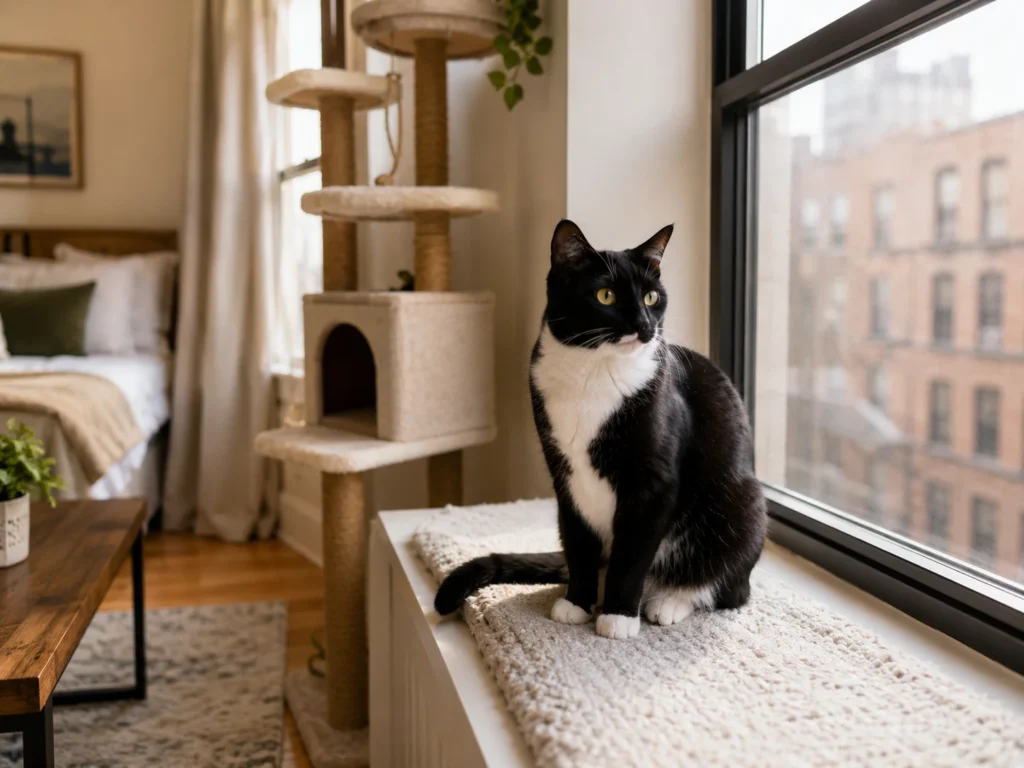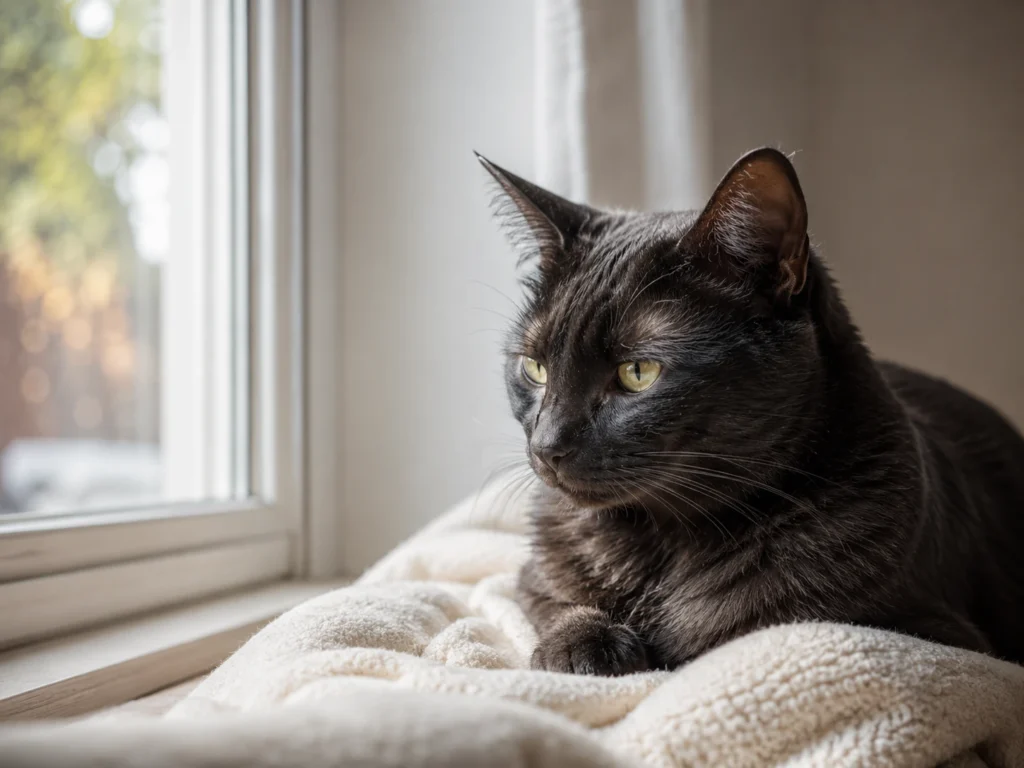
You place a toy beside your cat, move it invitingly, and wait. Your cat watches for a moment—or barely looks at it—before walking away.
When a cat won’t play with toys, it is easy to assume they are bored, lazy, unhappy, or simply “not playful.” However, toy nonengagement can have many explanations. The movement may be unappealing, the timing may be wrong, the setting may feel uncomfortable, or the activity may be physically difficult. Some cats also prefer very different forms of play from those their owners expect.
The most important question is whether your cat has always been selective about toys or whether their normal interest in play has noticeably declined. Long-standing preferences can often be explored through calm experimentation. A sudden, substantial, or persistent reduction in normal play deserves closer attention, particularly if other behavior or health changes are present.
Quick Answer
Your cat may ignore toys because the toy’s movement, size, texture, sound, position, or play format does not suit them. They may also be approached at the wrong time, feel exposed or pressured in the play area, need longer to watch before acting, or find the movement too fast or physically demanding.
Try changing one part of the play attempt at a time. Move the toy across or away from your cat, use pauses and hiding places, reduce noise and intensity, and allow your cat to watch, approach, retreat, or disengage voluntarily. If you are testing an interactive toy, How to Play With Your Cat Using a Wand Toy explains how to adjust its movement, pace, distance, and intensity to your cat’s response.
Do not repeatedly push the toy toward your cat or assume that buying more toys will solve the problem.
If your cat previously played but has become significantly less interested, consider the wider pattern. Pain, reduced mobility, dental discomfort, illness, medication effects, or sensory changes can affect activity. Contact a veterinarian if the reduction is sudden, persistent, or accompanied by changes in appetite, weight, movement, grooming, toileting, hiding, sleep, or social behavior.
Start With What Is Normal for Your Cat
Playfulness varies between cats. Some chase almost anything that moves. Others spend a long time watching before making one carefully timed pounce. A quieter play style is not automatically a problem.
Instead of comparing your cat with another cat or with an energetic video online, compare their current behavior with their own established pattern.
Has Your Cat Never Liked These Toys?
A cat who has never chased a particular type of toy may simply dislike that format or the way it is being presented.
For example, your cat may ignore a toy that:
- moves directly toward their face;
- rattles or jingles loudly;
- flies unpredictably above them;
- is too large to resemble manageable prey;
- requires jumping or sharp turns;
- remains motionless in an open area;
- is offered only when the cat is resting or occupied; or
- has become too familiar through constant exposure.
This does not prove that the cat dislikes all play. They may prefer a toy that creeps along the floor, disappears behind furniture, pauses frequently, or can be grabbed and held.
Some cats also respond more strongly to owner-led movement than to objects left on the floor. Others investigate safe independent activities when the household is quiet. Interactive or Solo Cat Toys: Which Does Your Cat Need? explains how these formats meet different play preferences.
Has Their Normal Interest in Play Declined?
A reduction from your cat’s usual behavior is more significant than whether they meet someone else’s idea of a playful cat.
Pay particular attention if a cat who normally chases, pounces, carries toys, or initiates games now:
- watches but no longer follows the toy;
- stops after movements they previously managed comfortably;
- hesitates before jumping or turning;
- abandons play unusually quickly;
- avoids grabbing toys with their mouth;
- becomes irritable when play is offered;
- withdraws from several familiar activities; or
- shows other changes in routine or behavior.
One quiet play attempt does not establish a health problem. Cats have variable energy and may not be receptive every time. However, a clear or continuing change from normal should not be dismissed as stubbornness, boredom, or inevitable aging.
Why Your Cat May Ignore Toys
Toy refusal is not one single behavior with one single cause. Before replacing every toy in the house, look at how, when, and where play is being offered.
Color alone cannot explain a toy’s appeal; our guide to cat color vision explains why noticing an object and wanting to play with it are different questions.
The Movement Does Not Resemble Preferred Prey
Many effective cat games use some features of hunting behavior: noticing, watching, stalking, chasing, pouncing, grabbing, and capturing. However, different cats may be attracted to different parts of that sequence.
One cat may respond to an object creeping along the floor. Another may prefer short fluttering movements. A third may watch a toy disappear behind a box before approaching slowly.
Randomly waving a toy in the air may be visually noticeable without being inviting. Try moving it across the cat’s field of view or away from them, pausing near cover and allowing opportunities to stalk.
A toy should also be catchable. Continuously pulling it away at the last moment may create frustration rather than sustained interest. Let your cat reach, hold, or capture it at suitable points during the game.
The Toy Is Too Fast, Loud, Close, or Repetitive
More movement does not always create more interest. A toy swept rapidly around a cat’s face may be intrusive, confusing, or difficult to track.
Your cat may disengage when the toy:
- starts moving at full speed;
- repeatedly touches or nearly hits their body;
- makes an unfamiliar or intense sound;
- moves without pauses or changes of direction;
- stays high in the air when the cat prefers the floor;
- requires constant running without opportunities to stalk; or
- follows the same predictable path every time.
Begin farther away and use smaller movements. If the cat starts tracking the toy with their eyes, resist the urge to make it immediately faster. Watching may be the beginning of engagement, not evidence that nothing is happening.
The Timing Does Not Suit Your Cat
A cat may ignore a good toy at an unsuitable moment. They may be sleepy, grooming, digesting a meal, watching something outside, or settling after activity elsewhere.
Look for times when your cat is already alert and moving around. A receptive cat may enter the room, investigate objects, follow you, watch movement closely, or initiate interaction.
You do not need to impose a rigid play schedule or a universal number of sessions. Instead, observe when your cat naturally becomes alert and test play during those windows. For broader guidance on flexible activity expectations, see How Much Playtime Does a Cat Need Each Day?.
The Play Area Feels Exposed or Contested
Play requires enough confidence to watch, stalk, move, and concentrate. A cat may remain cautious if the play area is noisy, exposed, unfamiliar, or controlled by another animal.
Possible sources of pressure include:
- another cat watching, blocking, or interrupting;
- a dog moving through the area;
- children or visitors approaching;
- loud appliances or sudden household noise;
- slippery flooring;
- limited access to cover or escape routes;
- being stared at or crowded; or
- competition for the same toy.
If you have multiple cats, try offering separate opportunities in different areas. A cat who appears uninterested in group play may participate when another cat is not present. How to Play With Multiple Cats explains how to protect individual access, divide play into separate turns, and recognize when one cat is controlling the session.
Environmental pressure is only one possibility. Refusing a toy does not by itself prove that a cat is anxious or chronically stressed. If you are seeing wider changes in body language, appetite, grooming, toileting, hiding, or social behavior, How Can I Tell If My Cat Is Stressed? provides a broader assessment.
The Toy Is Unfamiliar or Physically Difficult
Some cats approach unfamiliar objects immediately. Others need time to inspect them from a distance. Pushing a new toy toward a cautious cat may make the object less appealing.
Place an unfamiliar toy where the cat can see and investigate it without being cornered. When using it interactively, start with subtle movement rather than sudden noise or rapid contact.
Physical difficulty also matters. High jumps, rapid direction changes, hard flooring, heavy toys, or repeated twisting may be unsuitable for a cat with limited mobility. Older cats can still enjoy play, but they may prefer slower ground-level movement, easier catches, and comfortable surfaces. If you are adapting the setup for an older cat, How to Play With a Senior Cat explains how to use secure footing, reachable targets, gentle pacing, and response-led pauses.
Do not automatically attribute reduced activity to age. Pain, joint disease, illness, sensory changes, and other health problems can alter how a cat moves or responds and require veterinary evaluation.
Age, Temperament, and Experience Affect Play Style
Cats do not all display play in the same way. Age, confidence, temperament, early experience, mobility, vision, hearing, and the home environment can influence what participation looks like.
A confident young cat may chase immediately. A cautious adult may observe for a long time before approaching. A senior cat may follow a toy with their eyes, extend one paw, or make a short ground-level pounce rather than racing across the room.
These can all be meaningful responses. The goal is not to produce the most dramatic performance. It is to provide a safe opportunity that suits the individual cat.
Run a Low-Pressure Play Test
A simple play test can help you identify which part of the attempt is discouraging engagement. Use one safe toy and change only one or two variables at a time.
Choose a Receptive Moment
Wait until your cat is awake and comfortably alert. Choose a familiar area with secure footing, enough space to move, and access to cover or an escape route.
If another animal regularly interrupts, conduct the test separately. Do not carry a reluctant cat into position or block them from leaving.
Test Ground-Level Movement
Begin with the toy some distance from your cat. Move it slowly across the floor or away from them rather than directly toward their face.
Try short movements followed by pauses. Let the toy pass behind a box, furniture edge, or other safe piece of cover. A partially hidden object may be more interesting than one moving continuously in open space.
Watch whether your cat:
- turns their ears or head;
- tracks the movement with their eyes;
- shifts their weight;
- lowers their body;
- moves closer;
- reaches with a paw; or
- follows after the toy disappears.
These responses can reveal interest even when the cat does not immediately chase.
Test Brief Aerial or Fluttering Movement
If ground movement produces no response, try a small amount of gentle fluttering movement. Keep the toy within a comfortable tracking range and avoid swinging it toward the cat.
Do not assume the toy must stay in the air. Brief fluttering followed by landing, pausing, or moving behind cover may be more convincing than continuous overhead movement.
If the sound or movement causes your cat to flatten their ears, retreat, freeze tensely, or leave, reduce the intensity or stop. A play test should not become a test of how much discomfort the cat will tolerate.
Use Pauses, Cover, and Changes of Direction
Constant movement can become predictable or overwhelming. Let the toy pause, hide, reappear, and change direction.
A pause also gives your cat time to process what they have seen. Some cats need several seconds—or longer—before acting. Restart gently if they remain interested, but do not keep escalating the speed to provoke a response.
Allow Watching, Stalking, Capture, and Withdrawal
Your cat should be free to participate at their own level. Watching, approaching, stalking, pawing, chasing, and capturing are all possible forms of engagement.
Let the cat catch the toy during the game. If they hold or kick it, allow that interaction unless the toy is becoming damaged or unsafe.
Equally, let the cat stop. Walking away, turning attention elsewhere, grooming, or settling down can signal that the attempt is over. Do not follow them around the home with the toy or repeatedly restart after they have disengaged.
How to Read Your Cat’s Response
The response to a low-pressure test can help determine what to try next.
- The cat watches but does not chase: This may still be interest. Slow down, add pauses and cover, and allow more observation time.
- The cat approaches only when the toy stops: Use shorter movements and longer pauses. The original presentation may have been too fast.
- The cat follows ground movement but ignores aerial movement: Favor low, horizontal movement rather than trying to make the cat jump.
- The cat engages until another animal arrives: Test play separately and examine whether social pressure is limiting access.
- The cat investigates when alone: Provide appropriate independent options as well as calm owner-led play.
- The cat retreats from sound or sudden movement: Remove noisy features and introduce motion more gradually.
- The cat repeatedly ignores one familiar toy: Put it away temporarily rather than buying a large replacement collection. How to Rotate Cat Toys to Keep Them Interesting explains how to manage a small active set.
- The cat has lost interest in several familiar activities: Consider the wider behavioral and health pattern rather than continuing to change toys.
One response does not provide a behavioral or medical diagnosis. Look for patterns across several calm opportunities and compare them with your cat’s usual behavior.
Adapt Play Without Forcing It
Once you identify a promising response, make the activity easier to choose rather than harder to escape.
You can adapt play by:
- using slower or smaller movements;
- keeping the toy near floor level;
- providing traction on slippery surfaces;
- adding safe cover for stalking;
- offering separate sessions in multi-cat homes;
- reducing noise and household interruptions;
- allowing longer observation periods;
- offering reachable catches;
- ending when the cat disengages; and
- repeating successful movement patterns without making them completely predictable.
You do not need a room full of toys. A few safe options used in different ways can reveal more about your cat’s preferences than repeatedly buying unfamiliar products.
If you are considering optional scent enrichment, Catnip or Silver Vine: Which Should You Try for Your Cat? explains the comparison and why a cat does not need to respond to either.
Inspect toys before and after use. Remove them if they become damaged or develop loose, sharp, chewable, or detachable parts. Stringed, elastic, feathered, or entanglement-prone toys may require active supervision and secure storage after play. How to Choose Safe Toys for Your Cat covers construction, damage, ingestion, and supervision risks in more detail.
If your concern extends beyond toys and your cat seems to have few satisfying activities across the home, use Is My Cat Bored? for a broader assessment of enrichment, environment, health, and stress.
When Reduced Play Needs Veterinary Assessment
Play preferences differ, but a meaningful change from normal can be an early sign that something is wrong. Cats may reduce activity when movement, jumping, turning, grabbing, or concentrating becomes uncomfortable or difficult.
Possible medical influences include pain, reduced mobility, dental discomfort, illness, medication effects, and changes in vision or hearing. These possibilities cannot be confirmed through a home play test.
Contact a veterinarian if your cat’s reduction in play is sudden, substantial, persistent, or accompanied by changes such as:
- reduced appetite or altered eating behavior;
- weight loss or weight gain;
- stiffness, limping, or reluctance to jump;
- slower movement or difficulty using stairs;
- changes in grooming or coat condition;
- changes in litter box use;
- increased hiding or withdrawal;
- unusual irritability or sensitivity to touch;
- marked tiredness or a change in sleep pattern;
- reduced social interaction;
- vomiting, diarrhea, coughing, or breathing changes; or
- any other sign that your cat appears unwell or uncomfortable.
Do not wait for a cat to show dramatic distress before seeking advice. Cats may show discomfort through subtle changes in ordinary activities.
If you think a prescribed medication is affecting your cat’s activity, speak to the prescribing veterinarian. Do not stop or adjust medication without professional guidance.
Common Mistakes to Avoid
- Pushing the toy toward the cat: Prey generally moves across or away rather than repeatedly approaching the cat’s face.
- Starting too fast: Rapid movement can be difficult to track or may discourage a cautious or less mobile cat.
- Assuming watching means failure: Observation and stalking can be part of engagement.
- Forcing physical contact: Do not touch the cat with the toy, manipulate their paws, corner them, or prevent them from leaving.
- Using punishment: Scolding or startling a cat for ignoring a toy cannot teach comfortable play and may make the situation more negative.
- Offering play only in a busy area: Noise, traffic, people, or another animal may interfere with concentration.
- Never allowing a catch: Continually removing the toy may make the activity frustrating.
- Leaving every toy available continuously: Familiarity may reduce interest. A small, safely managed rotation is often more useful than a permanent pile.
- Buying more toys before testing presentation: The problem may be movement, timing, position, or pressure rather than the number of toys.
- Ignoring a change from normal: A cat who has stopped enjoying several familiar activities may need veterinary assessment, not a more exciting toy.
- Leaving unsuitable toys unattended: String, elastic, feathers, loose components, and damaged toys can create ingestion or entanglement hazards.
Helpful Related Guides
- How to Rotate Cat Toys to Keep Them Interesting
- Is My Cat Bored?
- Interactive or Solo Cat Toys: Which Does Your Cat Need?
- How Much Playtime Does a Cat Need Each Day?
- How Can I Tell If My Cat Is Stressed?
- How to Choose Safe Toys for Your Cat
Sources
- FelineVMA: Your Cat’s Environmental Needs
- Cats Protection: Cats and Play
- FelineVMA: How Do I Know if My Cat Is in Pain?
- AAHA: 2022 Pain Management Guidelines for Dogs and Cats
- AAHA/AAFP: 2021 Feline Life Stage Guidelines
- Cornell Feline Health Center: The Special Needs of the Senior Cat
- FelineVMA: Training Techniques for Addressing Undesirable Behaviors
Final Thoughts
A cat who ignores a toy does not necessarily dislike all play. The movement may be unsuitable, the timing may be wrong, the environment may feel uncomfortable, or the cat may simply prefer a quieter and more deliberate style.
Start with your cat’s normal behavior. Offer calm, safe experiments that allow them to watch, stalk, approach, catch, retreat, and finish voluntarily. Adjust the movement and setting before assuming that the answer is a larger toy collection.
Most importantly, take a meaningful decline seriously. If your cat has stopped enjoying familiar play—especially alongside other changes in movement, appetite, grooming, toileting, sleep, or social behavior—contact a veterinarian rather than continuing to troubleshoot the toys alone.