

Can Cats Taste Sweet Things?
Cats lack a working conventional sweet receptor. That explains sugar indifference, but interest in a human food still has several possible explanations.
Cats lack a working conventional sweet receptor. That explains sugar indifference, but interest in a human food still has several possible explanations.

Whiskers give cats information about nearby surroundings. Learn how these sensory hairs work, what their movements can tell you, and how to protect them.

Research supports cats distinguishing their owner’s voice, often through subtle ear or head movements. Learn how recognition differs from word understanding, affection, and coming when called.

Cats can distinguish some colors, but color, brightness, contrast, and toy preference are different questions. Explore what the evidence shows and where certainty ends.

Cats may notice when you are sick by detecting changes in your scent, behavior, voice, movement, and daily routine. Learn what cats may understand and why some become more attentive.

Cats can see much better than humans in low light, but they cannot see in complete darkness. Learn how feline night vision works and why cats still need some light to navigate.
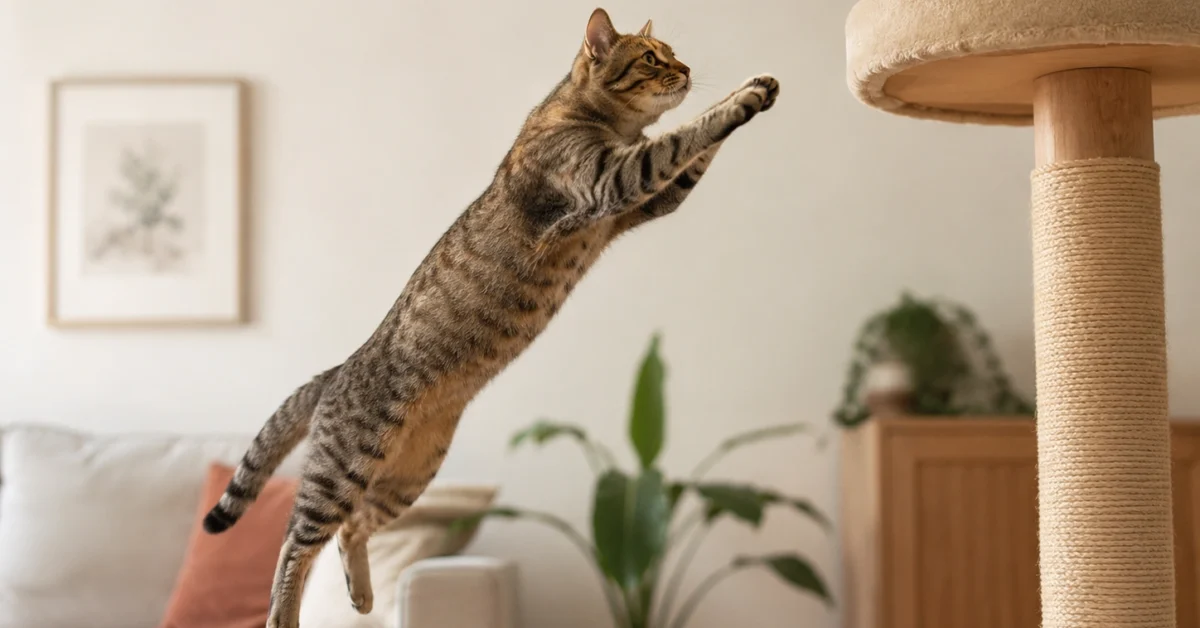
Cats can jump so high because of their powerful hind legs, flexible spines, balance, and precise body control. Learn how feline anatomy makes these impressive jumps possible.

Cats often sit in a loaf position because they feel relaxed, comfortable, and warm while keeping their paws tucked safely underneath them. Learn what this posture usually means and when changes in your cat’s body language may need closer attention.

If a cat has ever licked your hand, you have probably noticed that their tongue does not feel soft. It feels more like fine sandpaper.

Ever noticed the loose flap of skin hanging from your cat’s belly? Learn what a cat’s primordial pouch is, why cats have one, what it does, and when a swollen belly could be a sign of something more serious.